
Oxford Greyhound Results: Live Times, Racecards & Expert Analysis
 Available in US
Oxford greyhound results tell a story that goes beyond finishing positions. Every race at Sandy Lane produces data—sectional times, trap draws, calculated times, going allowances—that separates informed analysis from blind guesswork.
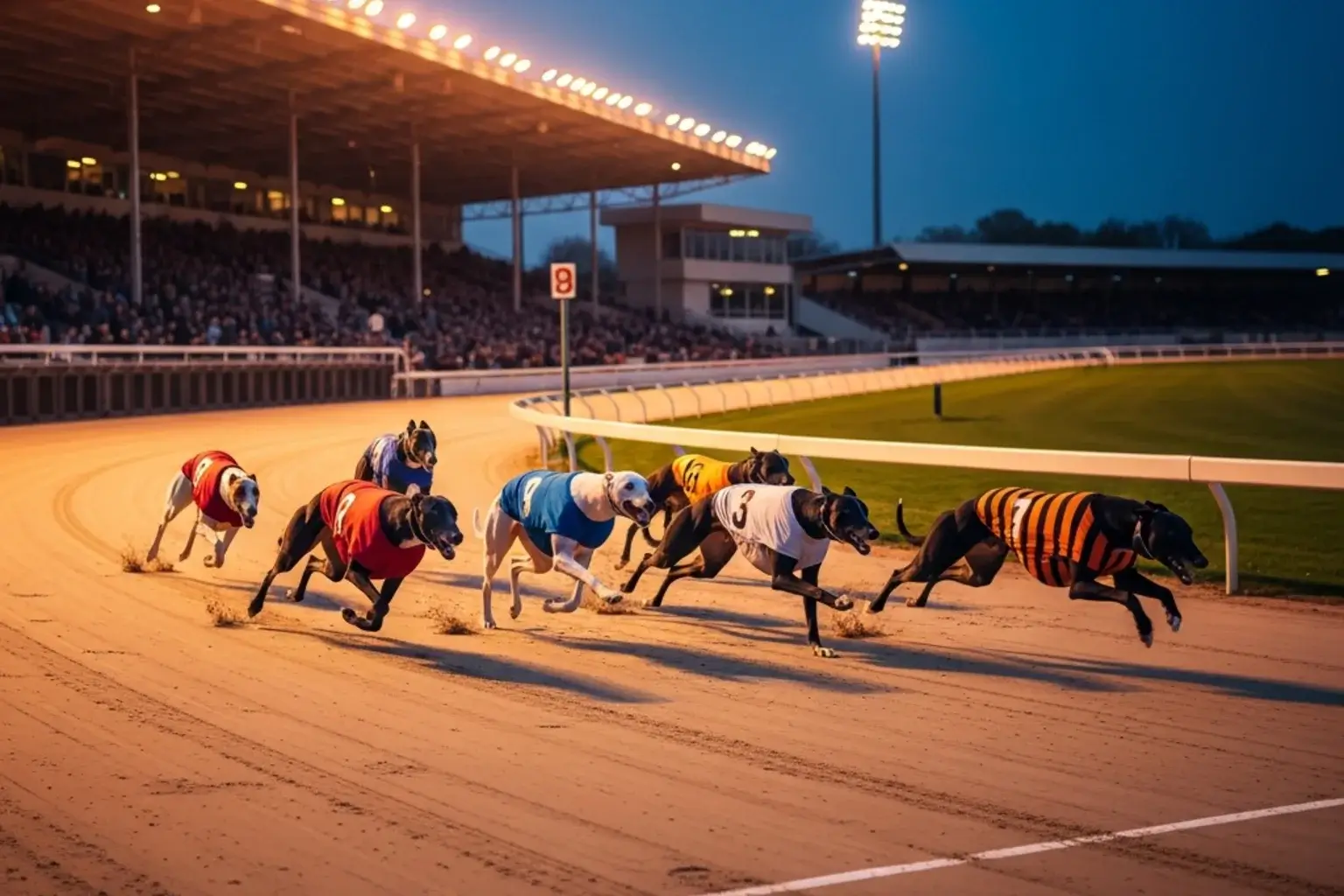
Oxford greyhound results tell a story that goes beyond finishing positions. Every race at Sandy Lane produces data—sectional times, trap draws, calculated times, going allowances—that separates informed analysis from blind guesswork. This is the data-first approach to Oxford Stadium racing, where numbers matter more than hunches and form guides replace folklore.
Oxford Stadium has served as a cornerstone of British greyhound racing since its original opening, surviving closure and emerging stronger after its 2022 reopening. Today it operates as one of 21 GBGB-licensed tracks in the United Kingdom, hosting BAGS meetings that attract bettors across the country through televised coverage and off-course betting pools. The track's 379-metre circumference and six distinct racing distances create a unique competitive environment that rewards careful study.
What you will find here is not another generic overview of greyhound betting. This guide dismantles Oxford racing into its component parts: how to decode racecards, what sectional times reveal about early pace and finishing speed, why certain trap positions statistically outperform others, and how going allowance adjustments translate raw times into comparable data. The welfare standards governing licensed racing receive equal attention, because understanding the sport means understanding its regulatory framework.
Whether you are placing your first forecast bet or refining an existing analytical approach, the material ahead prioritises actionable intelligence. Tables, statistics, and expert insights from industry professionals replace vague generalities. This is Oxford greyhound analysis as it should be—grounded in evidence, structured for practical application, and updated for the spring 2026 racing season.
Oxford Results at a Glance
- Oxford Stadium operates a 379-metre circuit with six racing distances from 250m sprints to 1045m marathons, reopened in September 2022 after a decade-long closure.
- Trap positions matter statistically: trap one wins 18-19% of races, trap three holds approximately a 2% edge, and first-bend leaders convert to victory 35% of the time.
- GBGB welfare data for 2024 shows a 1.07% injury rate (record low), 94% successful retirement rate, and only 3 economic euthanasia cases—down 98% from 2018.
- Only 21 licensed tracks remain in the UK, with Oxford among 17 holding BAGS contracts that generate the televised racing sustaining the industry's £740 million annual turnover.
- Calculated times, going allowances, and sectional splits transform raw results into comparable data—the foundation for any evidence-based approach to Oxford greyhound analysis.
Oxford Stadium Overview
Oxford Stadium occupies a distinctive place in British greyhound racing history. Located on Sandy Lane in the Cowley area of Oxford, the track first opened its doors in 1939 and operated continuously until economic pressures forced its closure on 29 December 2012. For nearly a decade, the stadium sat dormant while supporters campaigned for its return. Their persistence paid off when Oxford Stadium reopened on 2 September 2022, bringing licensed racing back to Oxfordshire after a ten-year absence.
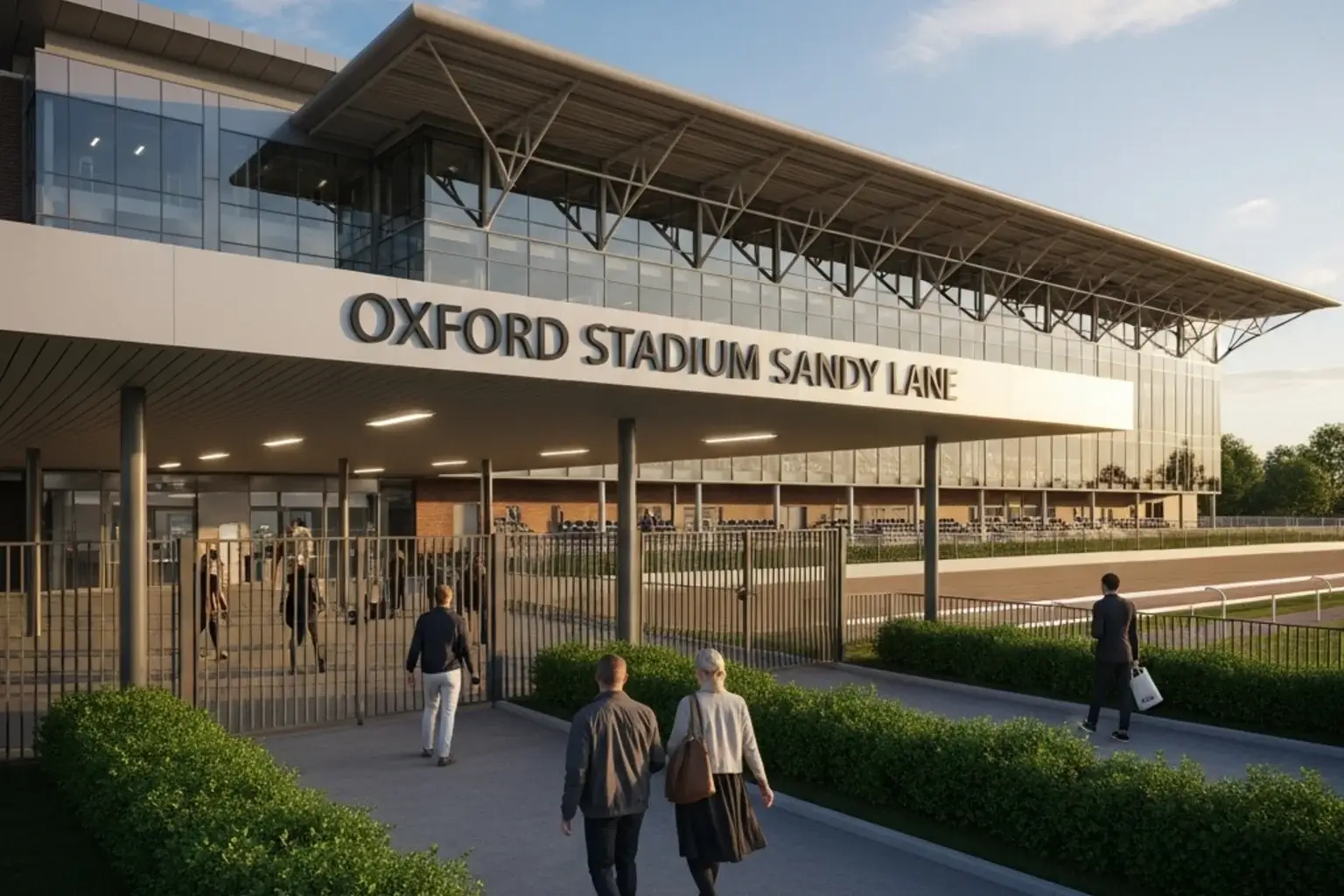
The reopening represented more than nostalgia. New management invested in facility upgrades and track maintenance to meet contemporary GBGB licensing standards. The stadium now operates regular BAGS meetings—Bookmakers' Afternoon Greyhound Service races broadcast to betting shops nationwide—alongside evening fixtures that draw local crowds. This dual-purpose scheduling ensures Oxford results feed into national betting pools while maintaining a community atmosphere for trackside spectators.
Swaffham Hare System — Oxford employs the Swaffham hare, an outside-running mechanical lure that maintains consistent speed throughout each race. This system differs from inside-rail hares used at some tracks, affecting how dogs position themselves on bends and creating specific running lines that influence trap draw advantages.
The track's survival matters beyond Oxford itself. With only 21 GBGB-licensed tracks remaining across the United Kingdom—nineteen in England, one in Wales, one in Scotland—each venue that continues operating preserves racing heritage while contributing to an industry facing ongoing contraction. Oxford's return demonstrated that well-supported tracks can overcome closure, though the broader trend of declining venue numbers continues to reshape British greyhound racing geography.
Understanding Oxford results requires appreciating this context. The track operates within a regulated framework governed by GBGB rules, welfare protocols, and licensing requirements. Trainers kennelled at Oxford submit their dogs to veterinary inspections, drug testing, and performance monitoring. Results published through official channels carry this regulatory legitimacy, distinguishing GBGB racing from unlicensed alternatives that operate outside welfare oversight. Every racecard, every sectional time, every finishing position at Oxford occurs within this structured environment.
Track Specifications
The physical dimensions of a greyhound track determine everything from trap bias to finishing speeds. Oxford Stadium's circumference measures 379 metres, with runners reaching the first bend after 108 metres from the traps. These numbers matter because they dictate how much ground inside-drawn dogs gain on the rails versus how much trouble wide runners face when the pack tightens.
379m
Track circumference
108m
Distance to first bend
Oxford offers six racing distances: 250, 450, 595, 645, 845, and 1045 metres. The 450-metre trip serves as the standard distance, used for most graded races and providing the baseline against which form is typically compared. Sprint races over 250 metres demand explosive early pace with minimal time for recovery from poor breaks. Middle-distance events at 595 and 645 metres introduce additional tactical considerations, while the 845 and 1045-metre marathon distances test stamina and bend negotiation over multiple circuits.
| Distance | Type | Bends | Primary Factors |
|---|---|---|---|
| 250m | Sprint | 2 | Trap speed, early pace |
| 450m | Standard | 4 | Balanced: pace and stamina |
| 595m | Middle | 5 | Stamina, bend work |
| 645m | Middle | 6 | Sustained stamina |
| 845m | Marathon | 8 | Endurance, tactical pace |
| 1045m | Marathon | 10 | Pure endurance |
Comparing Oxford to other UK venues reveals a mid-sized track by circumference standards. Smaller circuits with tighter bends amplify inside-trap advantages because wide runners lose more ground negotiating sharper turns. Oxford's configuration offers a moderate bias—neither the dramatic inside advantage seen at compact venues nor the negligible trap differences found at larger circuits. This middle-ground positioning makes Oxford results more transferable when assessing dogs that race at multiple tracks, though local form always carries weight.
Track surface conditions interact with these dimensions. Sand depth, moisture levels, and maintenance schedules affect going, which in turn influences times across all distances. A dog posting 28.50 seconds over 450 metres on standard going may run slower or faster on heavy or fast surfaces, with calculated time adjustments accounting for these variations. The specifications provide the framework; conditions on any given race day provide the variables.
With Oxford's physical parameters established, the next step is learning to read the data produced by racing on this track.
How to Read a Racecard
A greyhound racecard compresses essential information into a standardised format that rewards careful reading. Each element serves a purpose, and understanding the layout transforms a grid of numbers and abbreviations into actionable intelligence. Oxford racecards follow the GBGB template used across licensed British tracks, making skills learned here transferable nationwide.
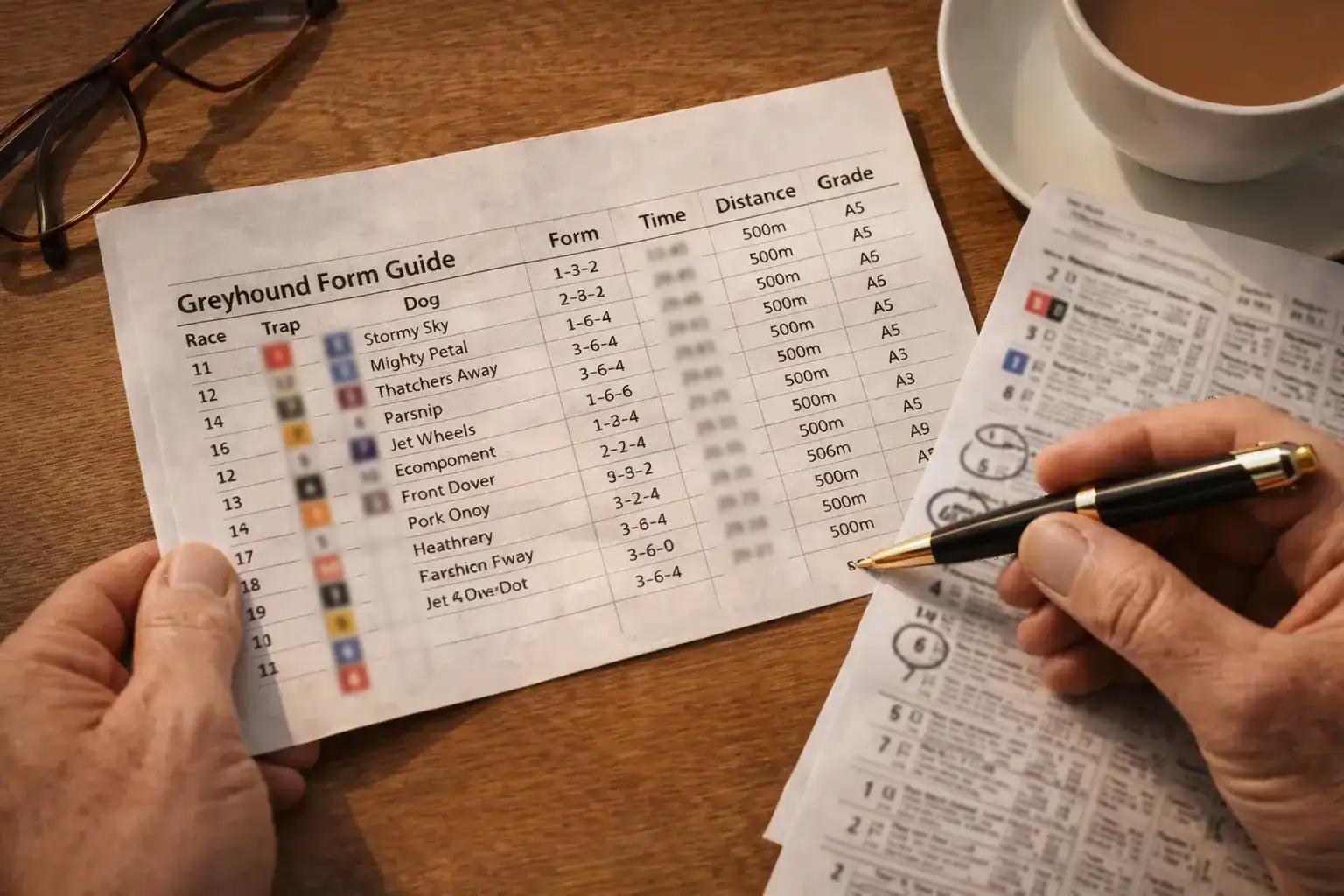
The header section establishes race context: race number, scheduled time, distance, and grade. These details define the competitive environment before examining individual runners. A 450-metre A4 race presents different expectations than a 250-metre open sprint or an 845-metre A7 marathon. Grade determines the quality of competition; distance dictates the required running style.
Racecard Header Elements — Race number and time for scheduling, distance in metres, grade designation (A1-A11 for graded races, OR for open races, M for maiden). Prize money and race type (BAGS, open meeting, trial) complete the header information.
Trap Numbers and Runner Details
Each runner occupies a numbered trap from one to six, identified by distinctive colours: trap one wears red, trap two blue, trap three white, trap four black, trap five orange, and trap six black-and-white stripes. These colours appear on the racing jackets, allowing trackside viewers to follow their selections visually. More importantly, trap numbers indicate starting positions that influence early-race dynamics.
Runner entries display the dog's name, trainer, and ownership information. The trainer connection matters because kennel form—how a trainer's dogs are performing collectively—often indicates conditioning and preparation quality. Repeat entries from successful trainers at Oxford deserve attention, while unfamiliar names warrant additional research.
Form Line Interpretation
The form line presents recent finishing positions in sequence, with the most recent result appearing on the right. A form line reading 321421 shows six races: third place three races ago, second in the following race, first (a win) next, fourth, second, and finally first in the most recent outing. This progression reveals improvement, consistency, or decline depending on the pattern.
Letters within form lines indicate non-standard outcomes. F denotes a fall, while S represents a slip at traps. W flags wide running, B indicates baulking by other runners, and numbers followed by letters provide context for finishing positions. A form line showing 3F2 tells a different story than 321—the fall explains a break in otherwise solid form.
Consistent Form
111211 — Four wins from six, one second place. High-quality, reliable performer.
Inconsistent Form
4F1365 — Mixed results with a fall. Talent present but unreliable.
Calculated Time and Weight
Calculated time adjusts raw finishing times to account for going conditions, creating a standardised measure for comparing performances across different race days. This figure matters more than actual times when assessing form because it neutralises surface variations. Two dogs posting identical calculated times have demonstrated equivalent speed regardless of whether one raced on fast going and the other on slow.
Weight appears in kilograms, typically ranging from 28 to 36 for racing greyhounds. Weight trends across recent races may indicate fitness changes, though stable weights generally suggest consistent conditioning. Significant weight gains or losses warrant investigation—a dog carrying extra weight after a layoff may need a race to regain sharpness.
Comments and Ratings
Race comments provide narrative context for finishing positions. LED indicates the dog led for some portion of the race, RAN ON shows strong finishing speed, while CROWDED or BAULKED explain interference that affected performance. These comments transform raw positions into stories, revealing whether a third-place finish resulted from inability to compete or from traffic problems that a cleaner run might avoid.
Timeform and other rating services assign numerical values based on performance analysis. Higher ratings indicate superior assessed ability, though ratings require context—an A1 dog dropping to an A4 race brings higher ratings against lesser competition. The racecard displays best times for the track and distance, offering quick reference for comparing historical performances.
Grade System
British greyhound racing employs a grading system that ensures competitive racing by matching dogs of similar ability. Oxford Stadium uses grades A1 through A11, with A1 representing the highest standard and A11 the lowest. This tiered structure prevents elite runners from dominating against outclassed opposition while giving developing dogs opportunities to progress through ranks as they improve.
Grading operates on recent performance. Dogs winning races move up in grade; dogs finishing poorly may drop down. The GBGB rulebook specifies movement criteria, though racing managers retain discretion for individual cases. A dog winning an A5 race typically faces regrading to A4 for subsequent entries, while consistent back-of-pack finishes trigger downward adjustment.
| Grade | Typical Calculated Time (450m) | Quality Level |
|---|---|---|
| A1 | 27.80 and faster | Elite |
| A2 | 27.81 – 28.10 | High quality |
| A3 | 28.11 – 28.40 | Above average |
| A4 | 28.41 – 28.70 | Average plus |
| A5 | 28.71 – 29.00 | Average |
| A6 | 29.01 – 29.30 | Below average |
| A7-A11 | 29.31 and slower | Lower grades |
Open Races — OR (Open Race) entries accept dogs of any grade, creating potentially mismatched fields where elite runners compete alongside mid-grade dogs. Open races often carry higher prize money and attract trainers seeking competitive tests for promising runners. Assess open race fields carefully—the grade spread creates both value opportunities and upset potential.
Maiden races cater to dogs that have not yet won at a GBGB track. These M-grade events provide pathways for young dogs entering competition and for older dogs returning after long absences. Maiden form requires cautious interpretation because competitors lack the established track records that graded racing provides.
Grade timing introduces strategic considerations. Trainers may enter dogs in lower grades after returning from layoffs, seeking confidence-building wins before facing stronger competition. Conversely, a dog dropping grades after a series of losses may simply be finding its correct level rather than indicating declining ability. Reading grade movement alongside form lines reveals whether current opposition suits a runner's actual capabilities.
Distance grades add further nuance. A dog graded A3 at 450 metres may carry different grades at other distances based on performances specific to those trips. Oxford's six distances mean some dogs specialise at particular trips while appearing outclassed elsewhere. Checking distance-specific grading prevents misreading form earned at unsuitable trips.
Sectional Times Explained
Total race time tells you who won; sectional times tell you why. Breaking races into segments reveals running styles, identifies pace advantages, and predicts how dogs will perform against different opposition. Oxford sectional data transforms result analysis from simple position recording into genuine performance assessment.
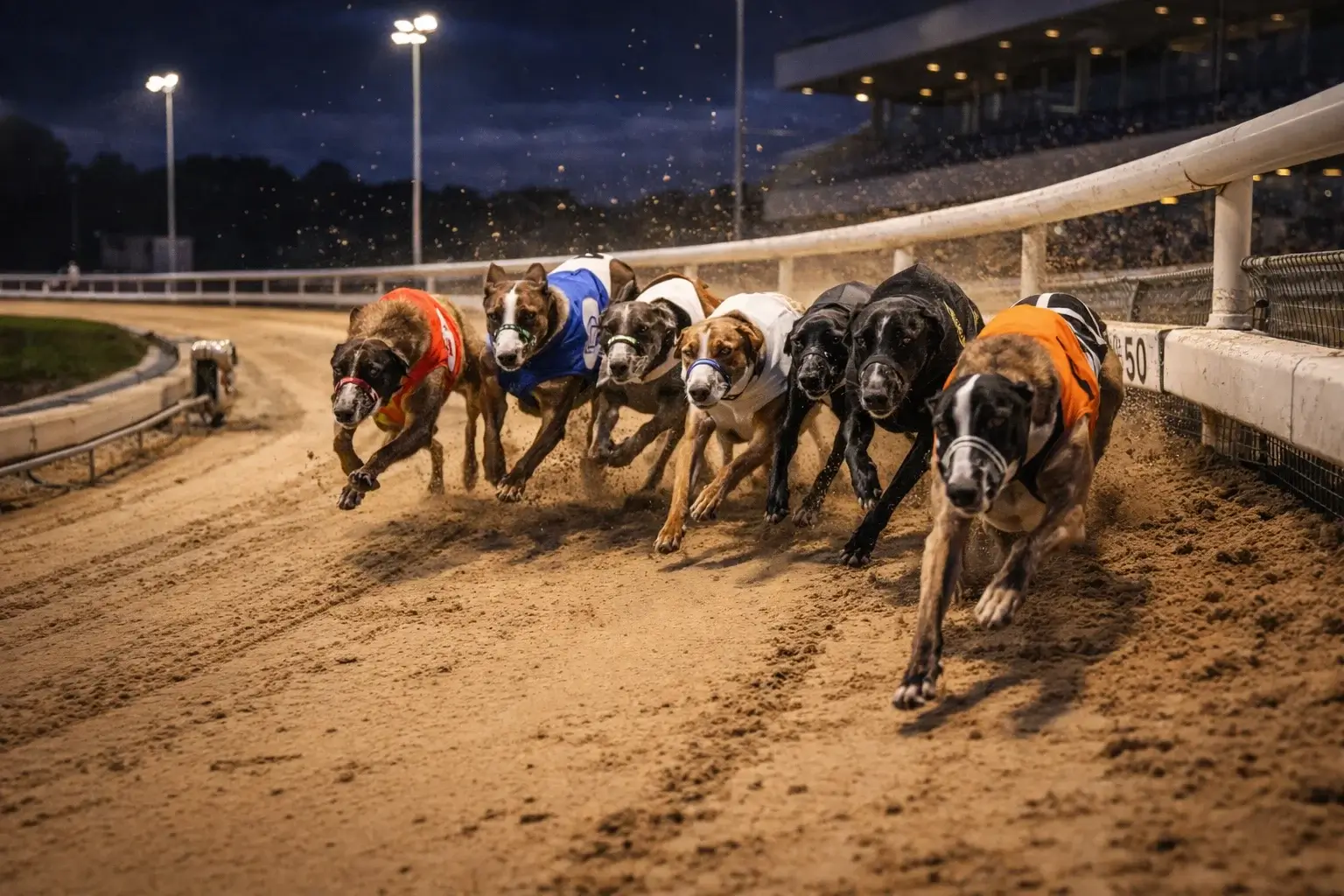
Standard sectional splits divide races into three phases: early pace (trap to first bend), middle section (bends two through four at standard distance), and run-in (final straight to finish). Each phase tests different attributes. Early pace rewards explosive trap speed and first-bend positioning. The middle section tests cornering ability and maintenance of momentum. Run-in performance shows finishing speed and stamina reserves.
Sectional Timing — Electronic timing captures each dog's passage through measured points on the track. These timestamps generate sectional splits that quantify performance at each race phase, independent of finishing position.
First-bend leadership carries significant predictive value. According to Timeform analysis, the dog leading at the first bend wins approximately 35% of races—substantially higher than the theoretical 16.67% expected from random distribution across six runners. This statistic reflects the advantage of clear running: leaders avoid traffic problems that compromise challengers.
Dogs that consistently reach the first bend in front convert that advantage into wins at more than double the rate that random chance would predict. Trap draw and early pace combine to create this edge.
Sectional analysis identifies mismatches invisible in raw results. Consider two dogs with identical 450-metre times of 28.40 seconds. Dog A posts a blistering early section but fades in the run-in; Dog B starts slowly but accelerates through the final straight. Against strong early-pace competition, Dog A may find itself crowded and unable to lead. Dog B's late speed becomes advantageous when early traffic slows front-runners. Same times, different profiles, different race projections.
Pace types emerge from sectional patterns. Front-runners require clean breaks and first-bend positions; their form suffers when drawn wide or against proven early-speed rivals. Hold-up runners settle early and finish strongly; they benefit from pace battles that weaken leaders. Middle-runners combine moderate early pace with sustained speed, offering flexibility but rarely dominating either phase.
Applying sectional analysis to Oxford results requires identifying each runner's preferred style, assessing how trap draws affect early positioning, and predicting how the race is likely to unfold. A field heavy with front-runners often produces fast early fractions that set up late closers. A field lacking early pace may see tactical jockeying through the opening bend, with the eventual leader dictating the race tempo.
Calculated sectional times account for going allowance, enabling cross-race comparison even when surface conditions differ. Raw sectional splits from a fast-going day cannot directly compare to heavy-going sectionals without adjustment. The calculated figures strip out environmental variables, revealing underlying ability independent of conditions.
Trap Draw Basics
Six traps, six starting positions, and decidedly unequal chances. Trap draw affects race outcomes more than casual observers recognise, and Oxford's track configuration creates measurable positional biases that data-driven bettors exploit. Understanding where each trap sits and what advantages or disadvantages it confers separates informed analysis from blind selection.
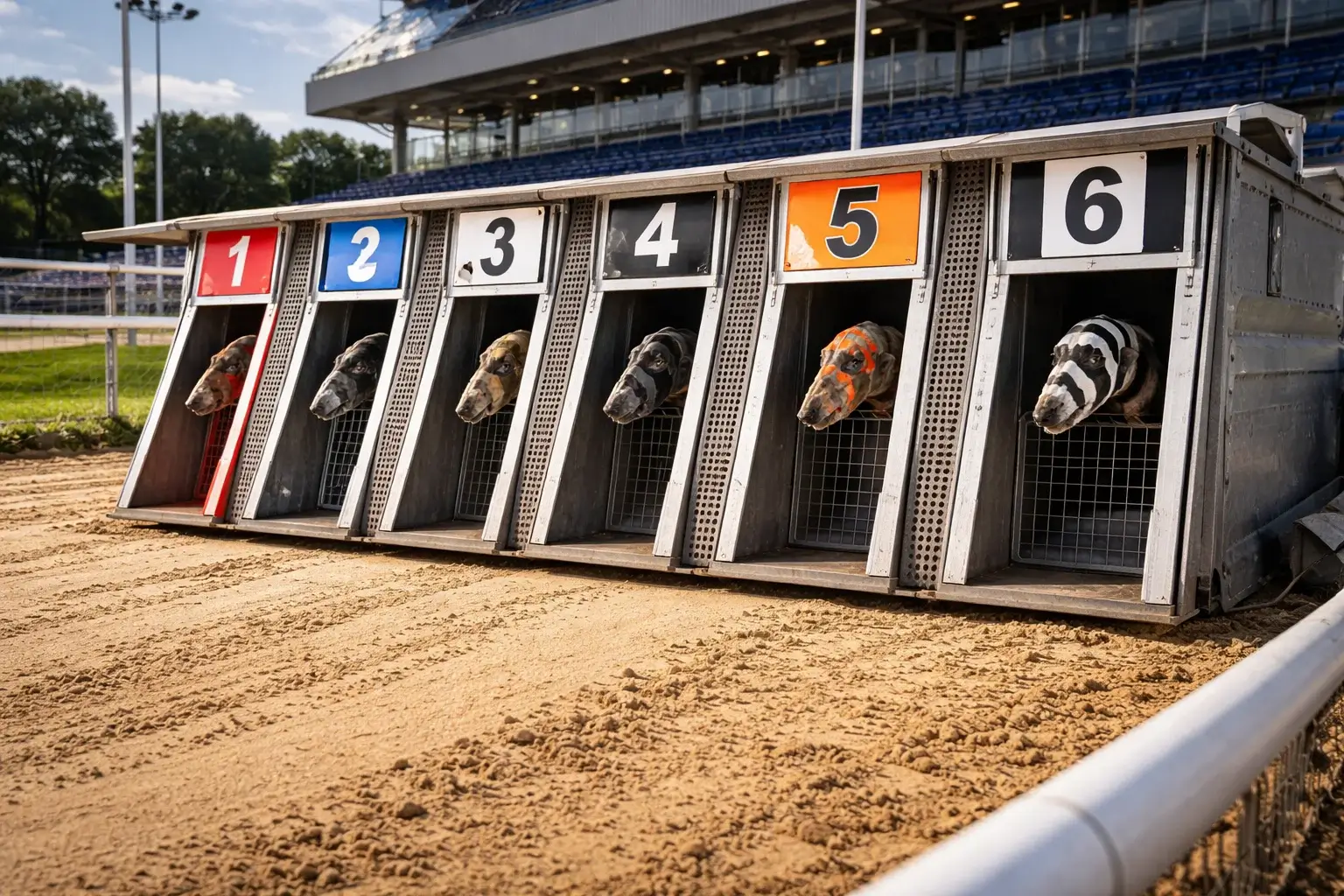
The inside traps—one, two, and three—enjoy shorter paths to the first bend. Trap one sits nearest the inside rail, requiring the least ground to establish position. Analysis of UK greyhound racing shows trap one produces win percentages around 18-19%, notably higher than the 16.67% that random distribution would predict. This two to three percentage point edge compounds across hundreds of bets.
18-19%
Trap 1 typical win rate
Trap three presents an interesting case. Oxford Stadium data indicates trap three holds approximately a 2% statistical advantage over its nearest competitors at the venue. This middle-inside position combines rail access with slightly more room than trap one, reducing the crowding risk that sometimes compromises the innermost berth. Dogs breaking well from three can secure the rail while avoiding immediate pressure.
Outside traps face geometric disadvantages. Traps five and six must cover additional ground to reach the first bend, and dogs drawn wide often swing even wider through turns to maintain speed. On tight-circumference tracks, these extra metres prove costly. Oxford's 379-metre circuit amplifies this effect modestly—wide runners lose ground but not catastrophically so, creating opportunities for fast-starting dogs drawn outside to compensate with superior early pace.
Trap draw interacts with running style. A confirmed railer benefits from inside draws that maximise rail proximity. A wide runner may actually prefer outside traps, seeking clear paths rather than fighting through traffic to reach preferred positions. Reading trap draws against running styles reveals whether draws help or hinder individual runners.
Distance affects trap importance. Over 250 metres, with only two bends, inside traps dominate because the shortened race allows minimal time for positional recovery. At 1045 metres, covering ten bends, early trap advantage dilutes as the extended distance provides more opportunities for class to prevail. Standard 450-metre races fall between these extremes, with trap draw significant but not determinative.
Smart trap analysis considers the entire field. A trap one draw means less when trap two holds a faster breaker who will crowd the rail before the bend arrives. Trap six may produce value when inside-drawn dogs lack early pace, allowing the wide runner to cross the field and establish position before traffic complications develop. Context matters as much as raw position.
Track Conditions and Going Allowance
The track surface at Oxford Stadium changes with weather, maintenance, and season. These variations affect running times, and the going allowance system exists to quantify those effects. Understanding going transforms raw times into comparable data, enabling fair assessment across different race days and conditions.
Going describes surface conditions in standardised terms: fast, standard, or slow. Fast going produces quicker times as the firmer surface provides better traction. Slow going, typically following rain, yields longer times as dogs work harder through softer sand. Standard going sits between these extremes, representing the baseline condition against which adjustments calculate.
Going Allowance — The time adjustment applied to actual race times to account for track conditions. If going is measured as 20 centiseconds slow, a dog running 28.60 actual time receives a calculated time of 28.40 after the allowance subtracts the surface penalty.
Track officials measure going before each race meeting using penetrometers or similar instruments that assess sand resistance. These readings generate the going allowance published on racecards. Punters should note the going figure when comparing form: a dog posting 28.80 on slow going may actually possess superior ability to one posting 28.60 on fast going once adjustments apply.
Rain affects Oxford racing predictably. Heavy precipitation softens the sand surface, slowing times and potentially altering how traps perform. Inside rails may hold moisture differently than outer sections, creating temporary biases invisible without trackside observation. Seasonal patterns also influence going—summer meetings on dry surfaces differ from winter fixtures where moisture retention extends.
Weather Extremes Policy — GBGB tracks, including Oxford, operate under guidelines for extreme weather. Severe cold, excessive heat, or dangerous conditions may delay or cancel meetings. When racing proceeds under marginal conditions, going adjustments may not fully capture surface effects, warranting cautious interpretation of times recorded.
Temperature affects greyhound performance independent of surface conditions. Dogs race faster in moderate temperatures than in extreme heat or cold. While going allowance captures surface effects, ambient temperature influences muscle function and respiratory efficiency separately. Summer evening meetings at Oxford encounter different thermal conditions than winter afternoon cards.
Practical application means checking going on every racecard before assessing form. A dog whose recent times appear slow may have encountered heavy going that masked true ability. Conversely, apparently quick times earned on fast going may overstate capabilities. Calculated time, incorporating going allowance, provides the comparison baseline. When calculated times conflict with raw times, trust the adjusted figures.
Betting Basics
Greyhound betting at Oxford Stadium offers multiple markets, from straightforward win bets to complex combination wagers. Understanding the available options and their mechanics enables informed selection of bet types suited to different analytical approaches. The bookmaker's menu provides tools; knowing which tool fits which situation determines betting effectiveness.
Win bets are the simplest form: select a dog, and collect if it finishes first. Fixed odds at the time of betting determine returns, or starting price (SP) settles bets based on odds when the race begins. Win betting suits confident selections where you believe a particular dog will beat the field. The returns directly reflect the perceived probability—shorter odds on favourites, longer odds on outsiders.
Each-Way Betting — An each-way bet combines a win bet with a place bet. If your selection wins, both parts pay. If it finishes second (and sometimes third, depending on field size and bookmaker terms), the place portion pays at reduced odds while the win portion loses. Each-way offers downside protection at the cost of doubled stakes.
Forecast betting requires predicting the first two finishers in correct order. The returns typically exceed win bets significantly because the prediction difficulty increases. A straight forecast names Dog A to win and Dog B for second; reversing this to Dog B winning with Dog A second loses the bet. Forecast dividends depend on the pari-mutuel pool at BAGS meetings—the total money bet on that specific combination determines the payout.
Reverse forecasts cover both finishing orders: Dog A first with Dog B second, or Dog B first with Dog A second. This doubles the stake but captures value when two dogs appear certain to fill the top positions regardless of which beats the other. The dividend pays based on whichever order actually occurs.
Tricast betting extends the forecast principle to the first three finishers in exact order. The difficulty increases substantially, but so do potential returns. Tricast dividends at Oxford BAGS meetings occasionally reach impressive figures when unexpected combinations fill the frame. Combination tricasts cover multiple permutations—all possible orderings of three selected dogs—at correspondingly multiplied stakes.
Forecast and tricast bets suit situations where you identify dogs likely to place but cannot confidently predict exact order. Win bets suit strong selection conviction. Each-way bets bridge uncertainty about winning versus placing. Match your bet type to your analysis confidence level.
Odds calculation for pool bets differs from fixed-odds win betting. Tote pools divide total stakes among winning tickets after deductions, so dividends depend on betting patterns rather than pre-race assessments. Popular combinations pay less; overlooked combinations pay more. Finding value in forecast and tricast markets means identifying likely placings that other bettors underestimate.
Responsible gambling frameworks apply to all Oxford betting. Set budget limits before the meeting, avoid chasing losses, and treat betting as entertainment rather than income source. GBGB-licensed racing operates under Gambling Commission oversight, and licensed bookmakers offer self-exclusion tools and stake limits for customers requiring assistance.
Betting mechanics explain how to wager; the welfare framework explains why licensed racing operates differently from unregulated alternatives.
Welfare Standards in UK Racing
Licensed greyhound racing operates within regulatory frameworks designed to protect animal welfare. Oxford Stadium, as a GBGB-licensed venue, subjects all participating dogs to standards covering veterinary care, racing conditions, injury management, and retirement outcomes. Understanding these welfare structures provides context for Oxford results while addressing legitimate concerns about the sport.
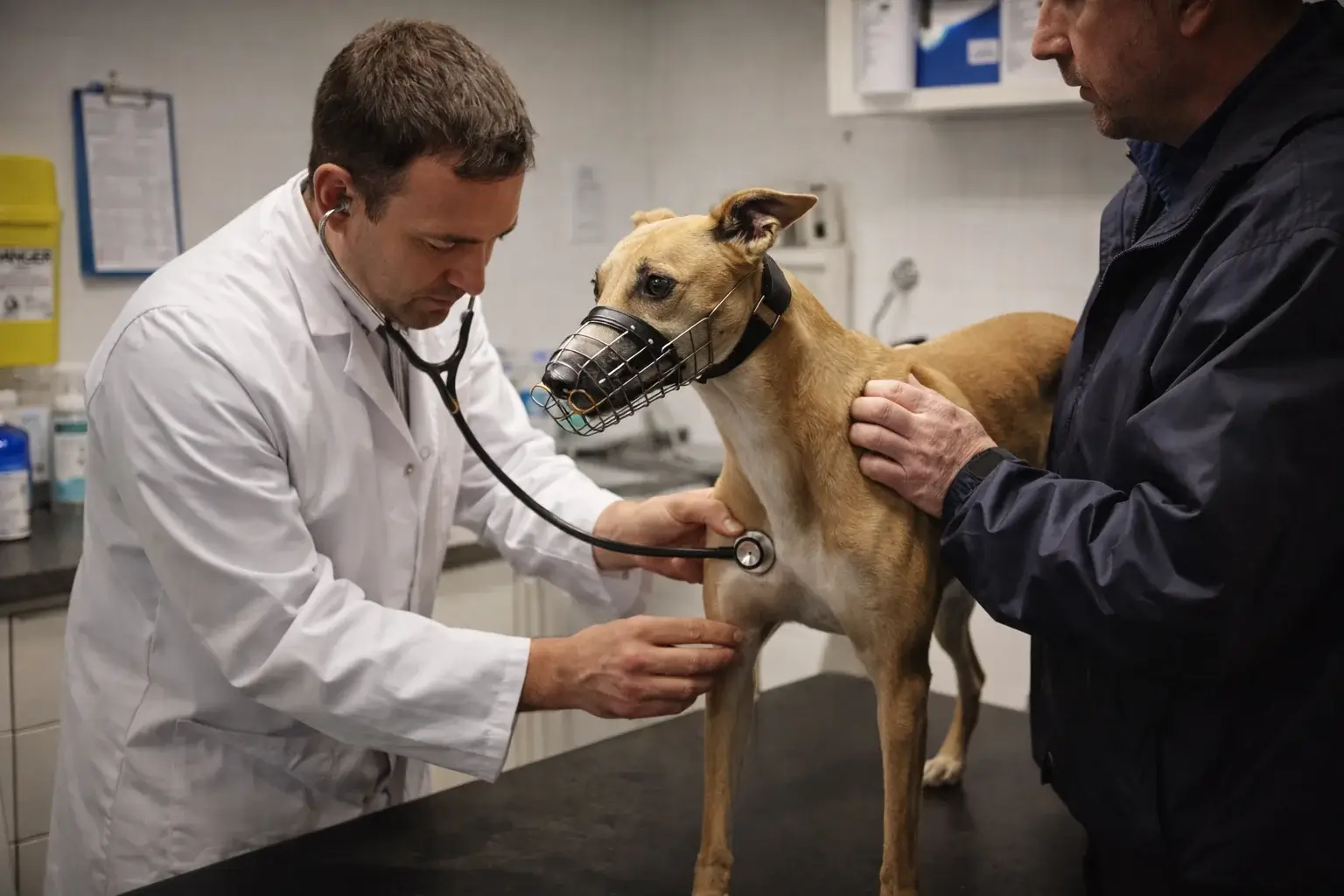
The numbers tell a measurable story. According to GBGB's 2024 Injury and Retirement Data, the injury rate across licensed tracks fell to 1.07% of total races—the lowest figure on record. Track fatality rates dropped to 0.03%, representing a halving from the 0.06% recorded in 2020. These improvements reflect sustained investment in track surfaces, veterinary protocols, and injury prevention research.
1.07%
Injury rate at GBGB tracks (2024)
94%
Successful retirement rate (2024)
Retirement outcomes show similar progress. GBGB data for 2024 reports that 94% of greyhounds successfully transitioned into retirement, up from 88% in 2018. The reduction in economic euthanasia—dogs put down for cost rather than welfare reasons—has been particularly dramatic. GBGB reports that only 3 greyhounds were euthanised for economic reasons in 2024, compared to 175 in 2018—a 98% reduction.
"I am particularly proud of the progress we have made around economic euthanasia. As a Board, we have been clear that putting a greyhound to sleep for economic reasons is unacceptable and I am pleased that we have reduced this by 98% since 2018." — Mark Bird, CEO, Greyhound Board of Great Britain
"There is much to be pleased and encouraged by in this year's data. It shows that the initiatives we have introduced in recent years are now embedded and are helping to consolidate the significant progress we have made since 2018 across all measures." — Mark Bird, CEO, Greyhound Board of Great Britain
Financial structures support welfare outcomes. The Greyhound Retirement Scheme (GRS) requires a £420 bond per registered racing greyhound—increased from £400 in 2025—funding homing centres that place retired dogs with adoptive families. Since 2020, more than £5.6 million has been distributed to homing centres through this scheme. The Injury Recovery Scheme (IRS), supporting treatment for injured greyhounds, has paid nearly £1.5 million since December 2018.
Veterinary Oversight — Every GBGB race meeting requires qualified veterinary attendance. Dogs undergo pre-race examinations, and any injuries receive immediate attention. Veterinary professionals retain authority to withdraw dogs from competition if welfare concerns arise.
Welfare debates continue within and beyond the industry. Critics point to absolute injury numbers—3,809 injuries recorded across licensed tracks in 2024—as evidence that racing inherently compromises welfare. Advocacy groups call for legislative bans similar to those enacted in multiple US states. The Senedd in Wales passed Stage 2 of a bill to ban greyhound racing within the nation, reflecting ongoing political scrutiny of the sport.
Oxford operates within this contested landscape. The track's GBGB licence commits it to welfare standards, veterinary inspections, and data reporting that independent operators avoid. Results published from Oxford carry this regulatory context: the dogs racing there are registered, tracked, and protected by institutional frameworks absent from unlicensed alternatives. Whether those frameworks satisfy ethical concerns remains a matter for individual judgement, but the data exists for evaluation.
UK Greyhound Racing Landscape
Oxford Stadium sits within a broader British greyhound racing industry that has contracted dramatically over decades while maintaining commercial significance. Understanding the national landscape contextualises Oxford's role and reveals the economic structures sustaining licensed racing in 2026.
The venue count tells a story of persistent decline. Blue Cross reports that only 21 GBGB-licensed tracks remain operational in the United Kingdom: nineteen in England, one in Wales, and one in Scotland. This figure contrasts starkly with historical peaks. GREY2K USA documented that Britain once hosted at least 77 licensed venues—the current 21 represents a reduction exceeding 70% over the sport's history.
| Region | Licensed Tracks | Notable Venues |
|---|---|---|
| England | 19 | Romford, Crayford, Nottingham, Oxford |
| Wales | 1 | Valley (Ystrad Mynach) |
| Scotland | 1 | Thornton (Fife) |
| Total UK | 21 |
BAGS racing—the Bookmakers' Afternoon Greyhound Service—provides the commercial backbone sustaining most remaining tracks. Seventeen GBGB venues hold BAGS contracts, producing more than 25,000 races annually for broadcasting to betting shops and online platforms. These races generate the off-course betting turnover that funds track operations, trainer fees, and welfare schemes. Without BAGS, many venues would face the same closure pressures that eliminated competitors.
Betting turnover quantifies the industry's commercial scale. Gambling Commission data showed approximately £740 million in annual greyhound racing turnover during 2021-2022, representing a substantial market share of British sports betting. This revenue supports the infrastructure enabling Oxford results: timing systems, veterinary services, regulatory oversight, and broadcast facilities all depend on betting-driven income.
£740m
Annual betting turnover
"UK greyhound racing is certainly better placed to enter a second centenary of sporting endeavours in the next couple of years, but we can never be complacent in terms of maintaining our sport's social licence within society." — Mark Bird, CEO, Greyhound Board of Great Britain
Legislative pressures add uncertainty to industry projections. Scotland's parliament approved the general principles of a greyhound racing ban in January 2026, with the bill now proceeding through Stage 2, though the single licensed Scottish track at Thornton suspended operations in March 2025. Wales continues advancing similar legislation through the Senedd, with implementation timelines potentially extending to 2027-2030. England shows no current legislative momentum toward prohibition, but the Welsh and Scottish initiatives demonstrate political vulnerability.
Oxford's position within this landscape combines advantages and vulnerabilities. The 2022 reopening proved that closed tracks can return to operation with sufficient local support and investment. However, Oxford depends on the same BAGS contract revenues and betting turnover that sustain all licensed racing. Economic pressures affecting the broader industry—increased gambling taxes, changing consumption patterns, welfare campaign pressures—filter through to individual venues including Oxford. The results produced at Sandy Lane exist within this interconnected system.
Frequently Asked Questions
How do I read an Oxford greyhound racecard?
Oxford racecards display information in a standardised GBGB format. The header shows race number, time, distance, and grade. Each runner entry includes trap number (one through six), dog name, trainer, recent form, weight, and calculated time. The form line shows finishing positions from recent races, reading left to right from oldest to newest. Letters in form lines indicate non-standard outcomes: F for falls, S for slips, W for wide running. Calculated time adjusts for going conditions, providing comparable performance measures across different race days. Comments from previous races explain finishing positions with notes like LED or BAULKED, revealing whether results reflected ability or circumstances.
What do sectional times and trap positions mean at Oxford Stadium?
Sectional times break races into phases, measuring early pace to the first bend, middle-section performance through the bends, and run-in speed to the finish. Dogs leading at the first bend win approximately 35% of races, making early pace a crucial factor. Trap positions affect this: inside traps (one, two, three) enjoy shorter paths to the rail and first bend. Trap one produces win rates around 18-19%, while trap three shows roughly a 2% statistical edge at Oxford. Outside traps (five, six) must cover more ground to reach the first bend, though fast-starting wide runners can overcome this disadvantage by establishing position before crowding occurs.
What time are races at Oxford Stadium and how often do they run?
Oxford Stadium hosts regular BAGS meetings broadcast for off-course betting, alongside evening fixtures attracting local crowds. BAGS meetings typically begin in the early afternoon, with individual races running at intervals of approximately 15 minutes. Evening cards start later, often around 7pm, continuing through 10-12 races. The specific schedule varies by day and season—checking the Oxford Stadium website or racing press provides current fixture lists. Most racing weeks include multiple meeting days, though bank holidays and special events may alter the regular pattern. As a GBGB-licensed venue, Oxford's schedule integrates with national broadcasting and betting pool coordination.
Conclusion
Oxford greyhound results carry more information than finishing positions alone suggest. The data embedded in every racecard—sectional times, calculated times, trap draws, going allowances, form lines, grades—creates a framework for analysis that distinguishes informed assessment from guesswork. This guide has dismantled that framework into components: track specifications establishing the physical environment, racecard elements explaining what each figure means, trap statistics quantifying positional advantages, betting structures defining the markets available.
The spring 2026 racing calendar at Oxford continues producing data for those who know how to read it. BAGS meetings feed off-course pools while evening fixtures bring crowds to Sandy Lane. Behind the results sits an industry navigating contraction, legislative scrutiny, and welfare debates—context that shapes but does not determine race outcomes. Oxford's 2022 reopening demonstrated resilience; ongoing results demonstrate continued operation within GBGB frameworks.
What remains is application. Sectional analysis reveals pace profiles; trap statistics highlight positional edges; going allowances standardise comparisons; welfare data provides ethical context. The numbers await interpretation. Every Oxford result poses questions that careful analysis can answer—questions about form, about conditions, about value. The data-first approach outlined here provides the tools. Using them effectively requires practice, attention, and the recognition that greyhound racing rewards those who study rather than guess.
