
Oxford Stadium Forecast Dividends: Typical Payouts & Combination Patterns
 Available in US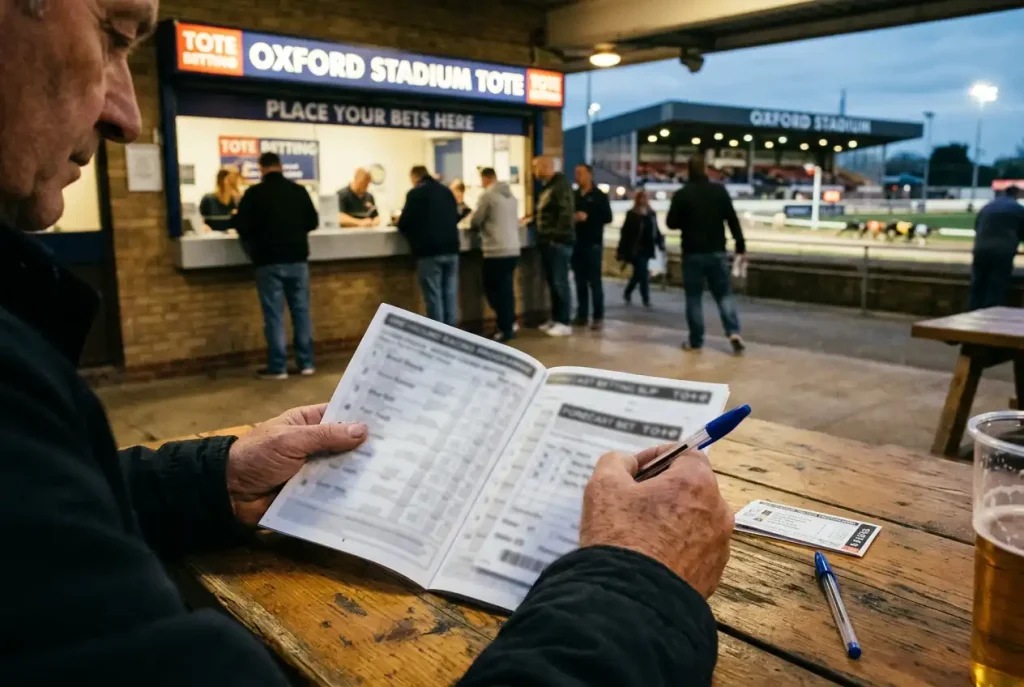
The forecast represents greyhound racing’s middle ground between simple win bets and the complexity of tricasts. It demands more precision than picking a winner alone while remaining manageable compared to naming the entire frame. For punters comfortable with race analysis but seeking better returns than win betting offers, forecasts provide the natural progression.
The wider context is set out in our Oxford greyhound results guide.
How Forecast Pools Work
Forecast betting operates on a pool system. All stakes on a particular race combine into a single pool, and successful bettors share the proceeds after the operator takes a percentage deduction. The dividend depends on how much money backed the winning combination relative to the total pool size. The Tote operates the official pool betting service, publishing dividend histories that inform future expectations.
A straight forecast requires naming the first and second finishers in exact order. If you select Trap 3 to win and Trap 1 second, only that precise outcome produces a return. Reversing the order, despite both dogs placing, loses the bet. This precision requirement creates the challenge but also generates the returns when successful.
Reverse forecasts cover both possible orderings. Selecting Trap 3 and Trap 1 in a reverse forecast pays if either dog wins with the other second. The stake doubles to cover both permutations, effectively placing two straight forecast bets simultaneously. Returns are lower than a winning straight forecast but the probability of success increases.
Combination forecasts extend coverage to multiple selections. Choosing three or more dogs and covering all possible first-second combinations spreads risk further while requiring larger total stakes. The more dogs included, the greater the cost but also the higher probability of some combination landing.
Pool size affects dividend stability. Oxford’s BAGS meetings attract reasonable betting volume, creating pools large enough that individual large stakes cannot drastically distort dividends. Smaller pools at obscure meetings might see wild dividend swings based on a single heavy bettor’s preference. The Tote publishes dividend information that allows punters to track historical payout patterns and identify value opportunities in forecast markets.
Typical Oxford Dividends
Forecast dividends at Oxford vary enormously depending on which combination wins. When two short-priced runners finish first and second as the market anticipated, dividends compress because many bettors selected that obvious combination. When outsiders fill the places unexpectedly, dividends expand because fewer punters anticipated the outcome and the pool distribution favours the minority who did.
Trap 3 winning with Trap 1 second represents one of the most common outcomes statistically. Analysis shows Trap 3 holds an edge of approximately two percent over its nearest competitor in win percentage, while Trap 1 runs at approximately 18-19% win rate. These strong-performing traps finish first and second together frequently, compressing dividends for this combination below levels that offer attractive value.
Conversely, wide-trap combinations like Trap 5 with Trap 6 produce inflated dividends when they occur. Market bias toward inside traps means these wide combinations attract less money despite being mathematically possible in any given race. When wide-drawn dogs outperform expectations and fill the frame together, the minority who backed them share larger pools and collect impressive returns.
Distance influences dividend patterns significantly. Sprint races favour predictable inside-trap combinations, compressing forecast returns as obvious outcomes occur frequently. Middle and staying distances see more varied outcomes as trap advantages diminish over longer trips, producing more frequent dividend spikes when unusual combinations land.
The average forecast dividend at Oxford falls within ranges typical for UK greyhound racing, neither unusually generous nor surprisingly compressed. Punters seeking above-average returns focus on identifying likely combinations the market underestimates rather than relying on random high dividends appearing through luck alone.
Track dividend history for specific combination types. Some punters maintain records of trap pairing dividends across meetings, building data that reveals which combinations consistently pay above expectation. This systematic approach transforms random forecast betting into pattern-based strategy.
Trap Combinations
Inside-inside combinations occur most frequently. Traps 1, 2, and 3 finishing ahead of the wider draws happens often enough that these forecast combinations carry compressed dividends. The structural advantages of inside running produce predictable outcomes that the market prices accordingly.
Inside-outside combinations offer interesting propositions. When an inside trap wins but a wide runner finishes second, dividends improve because the unusual placer attracts fewer backers. Identifying wide-drawn dogs capable of hitting the frame despite their draw disadvantage creates forecast value.
Middle trap combinations sometimes slip through market attention. Trap 3 and Trap 4 combinations, or Trap 2 with Trap 5, lack the obvious appeal of inside-trap locks or the longshot allure of wide-trap parlays. These middle-ground forecasts can represent overlooked value when form suggests such outcomes.
Study which combinations actually produce strong dividends at Oxford over extended samples. Track the trap numbers and corresponding dividend when unexpected combinations land. Over time, patterns emerge showing which combinations consistently pay above average returns when they occur, guiding future selection focus.
First-bend sectional analysis informs combination predictions. Dogs reaching the first bend in leading positions usually finish in the frame. Combining strong early-pace dogs from complementary traps produces forecasts based on projected race flow rather than random trap selection.
Strategy Tips
Use straight forecasts when you hold strong conviction about exact finishing order. The enhanced dividend for precise prediction rewards confidence in your analysis. Reserve reverse forecasts for situations where you identify two strong candidates but genuinely cannot separate their chances of winning versus placing.
Avoid combination forecasts with too many selections. Each additional dog increases costs multiplicatively while potential returns diminish proportionally. A combination forecast covering four dogs requires twelve units to cover all permutations; the potential dividend rarely justifies this expense compared to more selective straight or reverse approaches that concentrate stakes.
Factor forecast betting into overall race analysis rather than treating it as a separate exercise. The same form reading, trap assessment, and pace projection that informs win selections also determines forecast combinations. Dogs you rate highly for winning chances naturally become forecast banker material around which combinations build.
Accept that forecasts require patience and appropriate bankroll management. Strike rates fall below win betting because predicting two positions correctly is harder than predicting one. Bankroll management must accommodate longer losing runs between successful forecasts. The enhanced dividends when successful compensate for lower frequency, but only if stakes remain controlled during inevitable dry spells.
Consider the UK greyhound betting market context when setting expectations. With approximately 740 million pounds wagered annually on greyhound racing, pool liquidity at major tracks supports stable dividend structures. Oxford’s BAGS coverage ensures sufficient market depth that your forecast stakes contribute to meaningful pools rather than distorting thin markets.
Conclusion
Forecast betting at Oxford Stadium offers enhanced returns for punters willing to predict both winner and runner-up. Pool mechanics determine dividends, with obvious trap combinations paying less than unexpected outcomes. Strategic forecast selection uses the same analytical tools as win betting: form reading, trap assessment, and early-pace projection.
The three-dog version is in tricast betting.
Focus on identifying forecast combinations where your assessment disagrees with market consensus. When you rate a wide-drawn dog to place despite its trap disadvantage, or expect an unfashionable inside-outside pairing, the potential dividend rewards your contrarian view. Systematic forecast betting, grounded in genuine analysis rather than hopeful speculation, adds a profitable dimension to Oxford race engagement.
