Swaffham Hare at Oxford Stadium: How the Lure System Works
 Available in US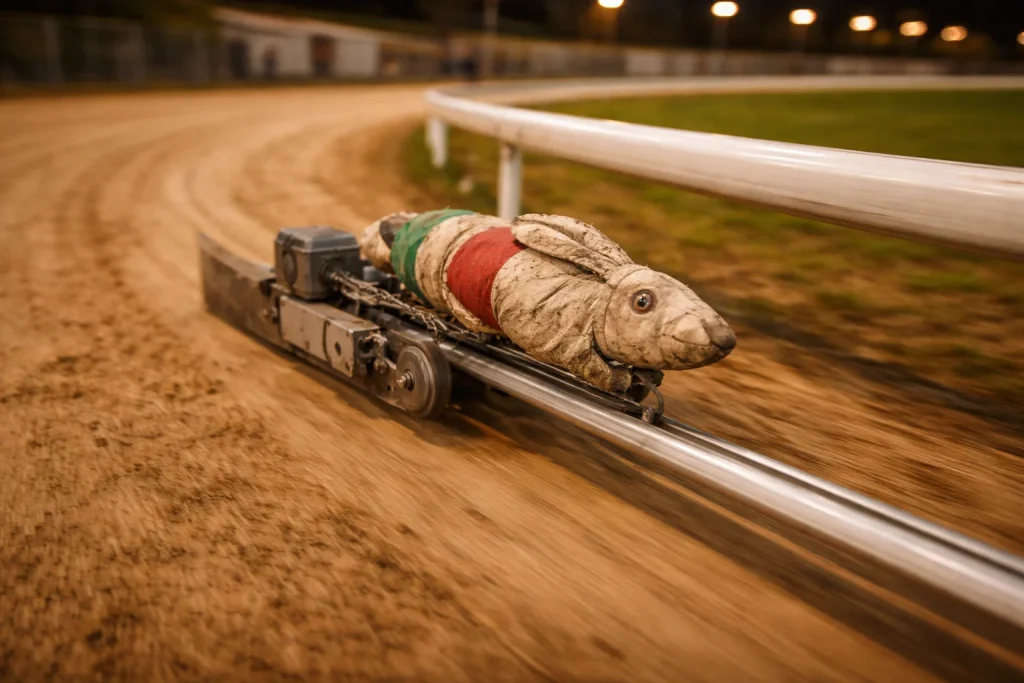
Most spectators barely notice the lure. Their attention fixes on the dogs, the traps, the jostling for position. But the hare system matters more than casual observers realise. It determines how races unfold, influences trap advantage, and affects the safety of runners throughout the contest. Understanding Oxford’s Swaffham hare system offers insight into why races at this track develop the way they do.
This guide explains the technical mechanics behind the Swaffham hare, examines its effect on racing dynamics, and compares it to alternative lure systems used elsewhere in Britain.
The wider context is set out in our Oxford greyhound results guide.
What Is Swaffham Hare?
The Swaffham hare is an inside-rail lure system that has become the dominant design in British greyhound racing. Named after its origin point in Norfolk, the system runs on a motorised track mounted to the inside fence. The lure itself—typically a fabric bundle designed to stimulate chase response—travels ahead of the dogs at adjustable speeds controlled by a trained operator.
At Oxford Stadium, the Swaffham hare operates around the track’s 379-metre circumference, maintaining a consistent lead over the chasing pack. The operator monitors the race and adjusts speed to keep the lure visible but uncatchable. This balance is critical: too slow and dogs may lose interest or collide with the mechanism; too fast and the chase instinct weakens.
The inside-rail positioning means the lure runs closest to trap one and furthest from trap six. This geometric reality creates inherent advantages for inside draws, particularly in the early stages of a race. Greyhounds naturally want to reach the lure, and those starting from inner traps have a shorter path to the rail where the hare travels.
Modern Swaffham systems are electrically powered with variable speed controls. The mechanism is housed in a protective casing to prevent injury if dogs make contact with the rail. Oxford’s system received updates during the stadium’s 2022 renovation, ensuring it meets current GBGB safety specifications.
How the Lure Shapes Racing
The Swaffham hare’s inside-rail position exerts significant influence on race dynamics at Oxford. Greyhounds instinctively head toward the lure after breaking from their traps, which means dogs from inside draws naturally move toward their target while those from wider traps must cut across the track to reach it. This simple geometry explains much of the trap bias observed at the stadium.
The first bend is where lure positioning matters most. Oxford’s first turn arrives after approximately 108 metres from the standard 450m start. Dogs that reach this point on the rail are following the lure directly; those running wide must navigate around competitors while maintaining sight of their target. Studies across UK tracks suggest greyhounds leading at the first bend win around 35% of races—a significant advantage attributable partly to lure positioning.
Speed management by the lure operator affects finishing dynamics. A well-managed hare maintains chase intensity throughout the race, encouraging full effort from all runners. Poor management—letting the hare get too far ahead or allowing it to become catchable—can alter race outcomes and create safety risks. Oxford employs experienced operators trained in maintaining optimal distances across all race lengths, from 250m sprints to 1040m marathons.
Weather conditions can affect lure performance. Rain may slow the mechanism slightly, while cold temperatures can impact the motor’s responsiveness. The track’s going report, which bettors study for surface conditions, does not typically address lure speed—but observant punters note when the hare appears to run differently than usual, adjusting their assessments of likely front-runner advantage accordingly.
For bettors, understanding the lure system means appreciating why certain traps perform better than others and why early pace often translates to race success at Oxford. The Swaffham hare is not merely a prop; it is an active variable that shapes every race run at the stadium.
Alternative Lure Systems
Not all British tracks use Swaffham hares. The two main alternatives are the outside hare and the McKee system, each creating different racing characteristics. Understanding these differences helps bettors adjust expectations when comparing form across venues.
Outside-hare tracks position the lure on the external fence rather than the inside rail. This configuration reverses trap bias: wider draws gain advantage because dogs naturally gravitate toward the outside where their target runs. Few UK tracks still operate outside-hare systems, but historical results from such venues show markedly different trap statistics compared to inside-rail setups like Oxford’s.
The McKee system is a more modern design featuring enhanced safety provisions and quieter operation. Some newer or recently refurbished tracks have adopted McKee technology. The operational principles remain similar to Swaffham—inside rail, variable speed, controlled by a trained operator—but with updated engineering. Oxford’s 2022 refurbishment incorporated current safety standards while retaining the Swaffham-style configuration familiar to greyhounds trained for inside-rail pursuit.
Irish tracks predominantly use outside hares, which is worth noting when assessing Irish imports at Oxford. Dogs transitioning from outside-hare tracks may need time to adjust their running patterns. A greyhound that naturally runs wide in Ireland—an advantage with an outside lure—may disadvantage itself at Oxford by failing to seek the inside rail promptly. Trainers typically note this transition period, and astute bettors watch trial performances before assuming an Irish import will reproduce its home form.
Fair Chase Requirements
GBGB regulations mandate that all races provide a “fair chase”—meaning the lure must remain visible and pursuable throughout the contest. This principle protects animal welfare by ensuring greyhounds are not frustrated or confused by a target that disappears or behaves erratically.
At Oxford, maintaining fair chase means the lure operator adjusts speed responsively during each race. If the field bunches unexpectedly or a clear leader emerges, the hare speed may increase to preserve adequate separation. If dogs fade late in longer races, the operator may reduce speed slightly to keep the target within visual range.
Stewards monitor lure operation as part of their race oversight duties. Persistent issues with hare management can result in meetings being abandoned or results voided. Such interventions are rare at established tracks like Oxford, but the regulatory framework ensures lure systems remain both functional and humane. The combination of trained operators and regulatory oversight means bettors can trust that races unfold under consistent conditions, removing one variable from an already complex analysis.
The Invisible Variable
Oxford Stadium’s Swaffham hare operates quietly throughout every race, largely unnoticed by those who focus only on the dogs. But this mechanical lure shapes outcomes in ways serious bettors cannot ignore. It creates trap bias favouring inside draws, amplifies the importance of first-bend position, and demands dogs understand inside-rail pursuit to succeed.
The circuit it runs around is in track circumference.
When studying form at Oxford, consider how greyhounds interact with the lure system. Early pace, rail position, and running style all relate to how effectively a dog follows the Swaffham hare. What looks like an invisible prop is actually a fundamental feature of every result the track produces.
