
GBGB Licensing: Requirements for Official UK Greyhound Tracks
 Available in US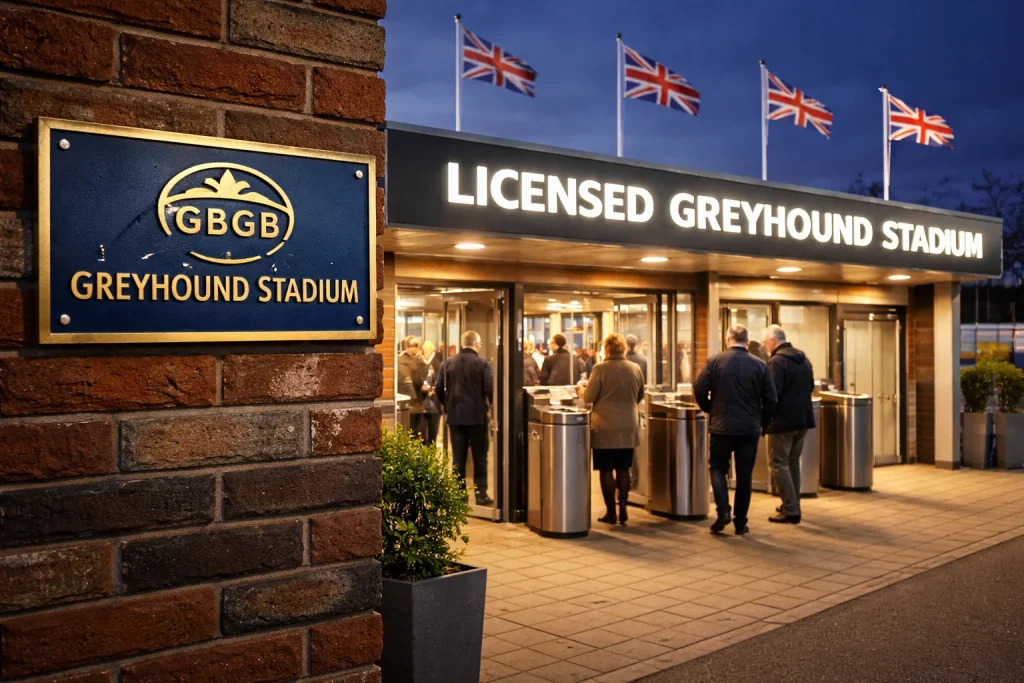
This guide examines GBGB’s role in British greyhound racing, outlines the requirements tracks must satisfy, and explains why the licensed/unlicensed distinction carries significant implications for bettors and welfare alike.
The wider context is set out in our Oxford greyhound results guide.
What GBGB Actually Does
The Greyhound Board of Great Britain operates as the sport’s self-regulatory body. It licenses tracks, registers greyhounds and trainers, establishes racing rules, and oversees welfare standards. Its authority derives from agreement among stakeholders rather than statute—greyhound racing is not regulated by government in the way horse racing is through the British Horseracing Authority.
GBGB currently oversees 21 licensed tracks across England, Wales, and Scotland. This figure has declined substantially from historical peaks—Britain once hosted at least 77 licensed venues. Track closures have concentrated racing at surviving venues, including Oxford Stadium, which returned to GBGB licensing when it reopened in 2022.
The regulatory function covers multiple areas. GBGB sets track surface standards, mandates veterinary presence, administers grading systems, and enforces rules during race meetings. It also manages welfare schemes including the Greyhound Retirement Scheme and Injury Recovery Scheme, funding these through industry levies and bookmaker contributions.
Critically, GBGB licensing enables legal betting. Bookmakers can only offer markets on races at licensed tracks. An unlicensed flapping track cannot legally appear in betting shop windows or on online platforms. This commercial connection creates incentive for tracks to seek and maintain licensing—without it, they cannot access the betting revenues that sustain most operations.
The organisation also administers racing rules, stewarding standards, and appeals processes. Disputes about race outcomes, rule violations, or licensing decisions flow through GBGB’s governance structures. This comprehensive remit makes the body central to every aspect of licensed greyhound racing in Britain.
Meeting the Standard
Track licensing requires satisfying specifications across multiple categories. The track surface must meet GBGB standards for composition, depth, and maintenance. Proper drainage, consistent going, and regular upkeep are mandatory rather than optional. Tracks failing surface inspections face remediation requirements or suspension.
Facilities for greyhounds must meet welfare standards. Kennel areas require appropriate sizing, ventilation, and temperature control. Dogs need access to water, comfortable resting space, and protection from weather extremes. These standards apply both to racing kennels and any on-site accommodation for greyhounds.
Veterinary provision is non-negotiable. Licensed tracks must have qualified veterinary surgeons present during all racing. Pre-race inspections, injury response capability, and post-race examination all fall within required veterinary duties. Tracks cannot race without veterinary coverage in place.
Timing and photo-finish systems must meet technical specifications. Accurate race timing underpins grading decisions, form analysis, and betting market integrity. Photo-finish equipment resolves close results definitively. These systems require regular calibration and certification.
Administrative requirements complete the picture. Tracks must maintain records of race results, greyhound registrations, and welfare incidents. GBGB inspectors conduct periodic audits to verify compliance. Documentation enables oversight that would be impossible without systematic record-keeping.
Licensed vs Flapping Tracks
Flapping tracks operate outside GBGB regulation. They are not illegal—unlicensed racing has existed for decades—but they lack the oversight, standardisation, and betting access that characterise licensed venues. The differences are substantial.
Welfare standards at flapping tracks are voluntary rather than mandatory. An unlicensed venue may provide excellent care, but nothing requires it to do so. No inspector will arrive to verify surface conditions; no welfare scheme funds retirement of dogs that race there. Quality varies widely and unpredictably.
Betting operates differently. Legal bookmakers cannot offer markets on flapping races, so wagering occurs informally—on-course betting among attendees rather than through licensed operators. This informality appeals to some participants but excludes the systematic betting analysis possible with published form, times, and grades.
Greyhounds at flapping tracks may not carry the documentation that GBGB registration provides. Racing histories become harder to verify; welfare outcomes become impossible to track. A dog that races at licensed tracks throughout its career generates data; one that races unlicensed generates only memories.
For bettors, the practical implication is clear. Racing at licensed tracks like Oxford offers transparency, form data, and welfare assurance that flapping cannot match. The betting available on licensed races reflects an industry subject to standards—imperfect perhaps, but standards nonetheless.
Some participants prefer flapping’s informality. Without GBGB oversight, tracks can operate with greater flexibility—but also with greater variability. What appeals to one person as freedom appears to another as unaccountable risk. The choice between licensed and unlicensed racing reflects broader preferences about regulation and accountability.
Oxford’s Licensed Status
Oxford Stadium operates as a fully licensed GBGB track. When the venue reopened in 2022, obtaining licensing was prerequisite to resuming operations. The refurbishment addressed not only visible elements like track surface and grandstand but also technical systems, kennel facilities, and veterinary arrangements required for licensing.
Licensed status enables Oxford’s integration with national betting markets. Races at Oxford appear on betting platforms, attract BAGS media coverage, and generate the commercial revenues that sustain operations. Without licensing, the 2022 reopening would have been economically unviable—a flapping track cannot generate sufficient income to justify modern facility investment.
The licensing also subjects Oxford to GBGB welfare oversight. Injury reporting, retirement tracking, and facility inspections all apply. Dogs racing at Oxford enter the regulated system, their careers documented from registration through retirement. This accountability distinguishes licensed racing from its unregulated alternative.
Maintaining licensing requires ongoing compliance. Oxford cannot rest on its 2022 refurbishment; it must continually meet standards through proper surface maintenance, veterinary provision, and administrative practice. The licence represents a commitment to standards rather than a one-time achievement.
Standards as Foundation
GBGB licensing creates the regulatory framework within which British greyhound racing operates. The 21 licensed tracks—Oxford among them—accept oversight in exchange for betting market access. This trade-off shapes the industry’s character, distinguishing it from unregulated alternatives while subjecting it to scrutiny that critics and supporters alike can evaluate.
For those who bet on greyhound racing, understanding licensing matters. The races at Oxford occur under conditions that standards require and inspectors verify. Whether those standards satisfy welfare concerns is debated, but their existence is not. Every race at a licensed track occurs within a regulatory structure; every bet on such a race engages with that structure. The alternative—unregulated racing without oversight or accountability—exists but appeals to different participants for different reasons.
Oxford’s GBGB licence connects the stadium to this national framework, ensuring that races run there meet standards applicable across all 21 licensed venues. For bettors, this means consistency, transparency, and accountability that unlicensed racing cannot provide.
The welfare standards behind the licence are in GBGB welfare data.
