
Oxford Stadium Fixtures & Schedule: Race Times for 2026
 Available in US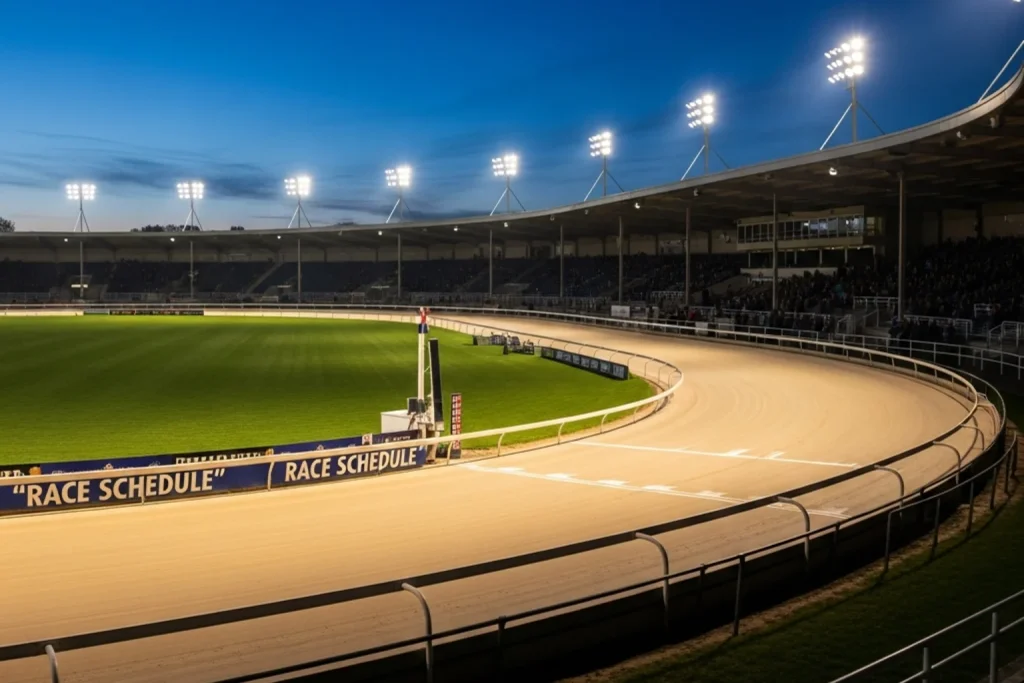
This schedule guide covers everything you need to plan around Oxford greyhound racing. Weekly patterns, seasonal variations, evening versus afternoon cards, special events, and the practical details of attending in person all feature. Whether you bet remotely and need to know when Oxford results will appear, or you plan to visit the stadium and want to time your arrival correctly, the information here serves both purposes. The schedule is your calendar for Oxford greyhound racing, and understanding it puts you ahead of punters who show up hoping something is happening.
Oxford reopened in 2022 after a decade of closure, and the fixture list reflects both the track’s renewed ambition and the realities of modern greyhound racing economics. BAGS meetings dominate because bookmaker funding keeps tracks viable. Open races and special events punctuate the calendar, offering higher-quality fields and bigger prizes. The balance between routine and spectacle shapes a racing year at Oxford that offers something for every level of interest.
The full picture is in our Oxford greyhound results guide.
Weekly Schedule Overview
Oxford Stadium typically hosts racing multiple days per week, with the exact schedule varying by season and bookmaker demand. The standard pattern includes evening meetings starting between 17:30 and 19:00, with afternoon matinees scheduled on selected days. Each meeting comprises between 10 and 14 races, spaced at intervals of approximately 12 to 15 minutes. The first race time anchors your planning; from there, the card unfolds predictably.
Evening cards represent the core of Oxford’s weekly output. These meetings cater primarily to the betting shop audience, with races broadcast via SIS and available through bookmaker streaming services. First race times for evening meetings typically fall between 18:00 and 19:30, depending on the day and time of year. The final race usually concludes by 22:00, giving punters roughly three to four hours of continuous action. Evening racing suits those who work standard hours—arrive after the commute, catch the card, leave at a reasonable hour.
Matinee meetings run earlier, with first races often scheduled around 11:00 or 14:00. These cards attract a different crowd: retirees, shift workers, dedicated racing enthusiasts who structure their days around the sport. Matinee pools can differ from evening pools in size and composition. Some punters prefer the smaller pools where their money moves the market less; others avoid them for the same reason. Field quality at matinees roughly matches evening meetings, though open races and special events more commonly fall on evening cards.
The specific days Oxford races change periodically based on BAGS scheduling decisions and track management preferences. Checking the official Oxford Stadium fixtures page or the GBGB central calendar before planning ensures you have current information. Assume nothing remains fixed month to month—flexibility in the schedule reflects the commercial realities facing all British greyhound tracks.
Bank holidays and major racing dates elsewhere can shift Oxford’s schedule. When horse racing dominates media attention, greyhound tracks sometimes adjust timing to avoid direct competition. Similarly, days when other BAGS tracks are dark might see Oxford pick up additional meetings. The schedule responds to commercial logic, not tradition. Treat the weekly pattern as a baseline that actual fixtures occasionally override.
BAGS Meetings Explained
BAGS—the Bookmakers Afternoon Greyhound Service—represents the economic backbone of British greyhound racing. This consortium of bookmakers contracts with tracks to provide live racing content for betting shops throughout the day. BAGS meetings follow strict broadcast requirements: races must start on time, coverage must be continuous, and the product must satisfy punters watching in thousands of shops nationwide. Oxford Stadium operates primarily as a BAGS venue, meaning most meetings serve this commercial function.
The scale of BAGS racing is substantial. According to industry data, 17 BAGS tracks across Britain host approximately 25,000 races annually. This volume keeps betting shops supplied with greyhound content from morning until night, complementing horse racing coverage and providing a constant stream of betting opportunities. Oxford contributes its share of this total, with fixtures slotted into the national BAGS calendar based on demand and availability.
For punters, BAGS meetings mean several things. First, races are broadcast—you can watch from any betting shop or via bookmaker streaming apps. Second, pools are nationwide. The tote pool for a BAGS race aggregates bets placed across the country, not just at the track. This creates larger pools than independent meetings would, generally producing more stable dividends. Third, information is standardised. Racecards, form data, and results appear across all major platforms because BAGS ensures consistent data distribution.
BAGS meetings at Oxford follow the same rules as BAGS meetings elsewhere. Grades run from A1 to A11, distances match the track’s standard options, and race spacing follows broadcast requirements. The racing itself is genuine—dogs compete, trainers strategise, results are determined on the track. But the commercial structure shapes everything from timing to field composition. Tracks want competitive races that attract betting interest. Grading secretaries balance form when drawing up cards. The result is racing designed partly as entertainment product, not purely as sport.
Non-BAGS meetings, called independent or open meetings, occasionally appear on Oxford’s calendar. These events operate outside the BAGS framework, often featuring higher-quality fields, bigger prizes, and local rather than national pools. Open meetings attract different profiles of punters—those interested in the sport itself rather than purely the betting. Oxford’s special events fall into this category, offering a change from the BAGS routine.
Evening vs Matinee Cards
Evening and matinee meetings at Oxford differ in atmosphere, audience, and—subtly—in betting dynamics. Evening cards draw the larger crowds when attendance matters, though most punters engage remotely regardless of session. The stadium atmosphere after dark, under floodlights, carries different energy than afternoon racing under grey skies. For visitors planning to attend in person, session choice affects the experience considerably.
Field quality across sessions shows minimal systematic difference at the graded level. The same dogs run evening and matinee meetings; grading assigns them based on form, not session preference. A dog graded A5 at Oxford runs in A5 races whenever those races are carded, whether at 11:00 or 19:00. However, open races and special events lean toward evening scheduling, meaning the highest-quality fields appear more often under floodlights. If watching elite dogs matters, evenings offer better odds of catching them.
Betting pools behave differently between sessions. Matinee pools tend smaller because fewer punters engage during working hours. Smaller pools mean individual bets have greater market impact, potentially distorting odds. They also mean more volatile dividends—a few large bets can skew returns dramatically. Sophisticated punters account for pool size when calculating value. Some prefer smaller pools for the opportunity to exploit inefficiencies; others avoid them to ensure their bets get absorbed without moving prices.
For in-person visitors, evening meetings suit social outings. The restaurant operates, hospitality packages apply, and the crowd creates atmosphere. Matinee meetings feel quieter, more focused on the racing itself. Neither is superior; preference depends on what you seek from the experience. Serious students of form might prefer matinee calm; groups celebrating occasions might prefer evening buzz.
Track condition variations between sessions occasionally influence racing outcomes. Evening cards run on surfaces that have experienced a full day’s weather exposure and possibly earlier racing. Matinee surfaces start fresher, potentially offering different going than evening equivalents. Sharp form students note when a dog’s best performances cluster in one session rather than the other, though separating session effect from random variation requires substantial sample sizes. This subtlety rarely determines selections but occasionally explains puzzling form patterns.
Special Events & Open Races
Oxford Stadium punctuates its BAGS calendar with special events that attract stronger fields and greater attention. Open races—competitions without grade restrictions—bring together the best dogs available, creating spectacles that transcend routine cards. Prize money for open races exceeds standard graded purses, incentivising trainers to enter their top performers. These events represent Oxford racing at its competitive peak.
Annual events follow patterns established before Oxford’s closure and revived since reopening. Specific dates and race names evolve, but the principle remains: certain meetings matter more than others. Trophy races, championship events, and invitation contests draw dogs from across the region. Trainers target these races when preparing their best, timing training cycles to peak on the night. Punters who follow form notice dogs being positioned for big-race targets, their earlier runs serving as preparation rather than genuine winning attempts.
Prize money at special events can reach several thousand pounds for the winner, dwarfing the few hundred typical for graded races. This disparity attracts quality. A trainer with an A1-class dog has incentive to enter Oxford’s open races if the money justifies the travel and competition. The resulting fields showcase greyhound racing at a level BAGS meetings cannot consistently match. For punters, this means both better sport to watch and different handicapping challenges—elite fields compress quality differences, making any result plausible.
Attending special events in person offers experiences unavailable at routine meetings. Crowds increase, atmosphere intensifies, and the racing carries genuine stakes. If visiting Oxford once per year, timing that visit for a major event maximises the experience. Checking the fixture calendar for open races and special events shapes planning for anyone prioritising quality over frequency.
How to Access Fixtures
Finding current Oxford Stadium fixtures requires navigating several sources. The official Oxford Stadium website publishes its own fixture list, typically covering at least the coming month with reasonable accuracy. This source reflects management intentions but may lag behind last-minute changes. Bookmarking the official page and checking weekly keeps you current without requiring multiple sources.
The GBGB—Greyhound Board of Great Britain—maintains a central calendar covering all licensed tracks. This GBGB calendar shows Oxford fixtures within the broader national schedule, useful for comparing when multiple tracks race and identifying gaps in coverage. The GBGB source carries authority as the sport’s governing body, though individual track pages may update faster for their own fixtures.
Third-party aggregators like Racing Post and Timeform compile fixture information across tracks, often adding useful context like notable entries or anticipated field quality. These services cater to serious punters who follow greyhound racing comprehensively rather than single-track enthusiasts. The Racing Post greyhound section provides fixtures alongside form, results, and analysis—a one-stop resource for those engaging deeply with the sport.
Bookmaker apps and websites show upcoming races for tracks they cover, effectively filtering fixtures to those available for betting. If you primarily engage with Oxford through betting rather than attendance, your bookmaker’s racing schedule may be the most practical reference. It shows exactly what you can bet on, when pools open, and what coverage is available. The limitation is seeing only betting-available events—independent meetings without bookmaker coverage might not appear.
Live Streaming & TV Coverage
BAGS meetings at Oxford receive broadcast coverage through SIS (Satellite Information Services), which distributes live racing to betting shops and licensed outlets nationwide. This coverage ensures that anyone in a British betting shop can watch Oxford races as they happen. The consistency of BAGS broadcasting means Oxford features regularly in the daily greyhound content stream, alongside Romford, Monmore, Towcester, and other circuit tracks.
For home viewing, bookmaker streaming services provide access to Oxford racing. Major operators including Bet365, William Hill, Coral, and Ladbrokes stream BAGS content to customers with funded accounts or recent betting activity. Requirements vary by operator—some require placing a bet on the meeting to unlock streams, others require simply holding an account balance. Checking your bookmaker’s specific terms clarifies what you need for access.
The commercial importance of broadcasting cannot be overstated. Betting turnover on greyhound racing reached approximately £740 million annually in recent years, and this money flows through bookmakers who require consistent, high-quality content. The stakes are significant: as GBGB CEO Mark Bird has warned, “the impact [of new taxes] on greyhound racing, which relies in a major way on contributions by bookmakers, will lead to the demise of the sport.” Oxford’s place in the BAGS schedule depends on delivering that content reliably. Broadcasting is not optional for tracks seeking viability; it is the revenue mechanism that justifies operations.
RPGTV, the dedicated greyhound and horse racing channel, occasionally covers Oxford for special events or features. Their coverage adds production value beyond standard SIS feeds—interviews, analysis, enhanced presentation. When Oxford hosts significant open races, RPGTV coverage sometimes follows. Checking RPGTV schedules before major events identifies whether enhanced coverage is available.
Recording or archiving Oxford races requires third-party services, as neither the track nor BAGS provides systematic replay access. Some betting operators maintain recent race replays for form study; Racing Post offers replays for subscribers. For punters who analyse their own bets retrospectively, these replay options allow reviewing how races unfolded rather than relying on memory or written comments.
Track Closures & Weather Cancellations
Weather affects Oxford’s schedule when conditions render the track unsafe or unfit for racing. Heavy rain can waterlog the surface; frost can harden it dangerously; extreme heat can stress dogs beyond acceptable limits. Track management balances commercial pressure to race against welfare obligations to protect animals and fair competition requirements. When conditions threaten either, meetings are cancelled or postponed.
Track inspections occur before meetings when weather raises concerns. The racing manager assesses the surface, checks conditions across the entire circuit, and determines whether racing can proceed safely. This inspection might happen hours before the scheduled first race or earlier if forecasts suggest problems. The decision to cancel comes from the track, not from BAGS or bookmakers, though commercial interests make cancellation a last resort.
Oxford’s history includes a significant closure period unrelated to weather. The track closed on 29 December 2012 amid the broader challenges facing greyhound racing, remaining dark for nearly a decade before greyhound racing recommenced on 2 September 2022. This extended closure reflected economic rather than meteorological factors—the difficulty of sustaining greyhound racing without sufficient commercial support. The 2022 reopening demonstrated renewed viability, but the closure years remind observers that fixtures depend on more than weather.
Checking for cancellations before travelling to Oxford saves wasted journeys. The official Oxford Stadium website and social media channels announce cancellations when they occur. BAGS and bookmaker services update fixture lists to reflect cancellations, though lag times vary. Phoning the stadium directly provides the most current information if doubt exists. Weather forecasts covering Oxford—available through Met Office and standard services—help anticipate potential problems, though track staff make final decisions that forecasts cannot guarantee.
Rescheduling cancelled meetings depends on calendar availability and commercial arrangements. BAGS meetings may shift to later dates if slots exist; independent meetings might not reschedule at all. Prize money attached to cancelled events typically carries over to the rescheduled date or next equivalent race. For punters holding ante-post bets, cancellation terms vary by operator—checking betting rules before committing to advance wagers protects against unexpected outcomes.
Planning Your Visit
Attending Oxford Stadium in person offers experiences that remote betting cannot replicate. The atmosphere of live racing—dogs in the parade ring, the crowd’s reaction to the hare, the physical proximity to competition—creates engagement beyond screen watching. Planning a visit requires attention to practical details that ensure the evening runs smoothly.
Oxford Stadium sits on Sandy Lane in Blackbird Leys, accessible by car or public transport from Oxford city centre. Parking is available on site, typically free for racegoers. Public transport options include bus services from Oxford; checking current routes and schedules through local transport providers ensures connection to the stadium. For visitors from further afield, Oxford’s rail links provide access to the city, with onward local transport completing the journey.
Entry to the stadium involves an admission fee that varies by meeting type. Standard BAGS meetings carry one price; special events may command premium entry. The admission fee grants access to the trackside viewing areas and facilities. Checking current prices on the Oxford Stadium website or by phone confirms what to expect. Concessions may apply for seniors, groups, or other categories—asking when booking clarifies available discounts.
Hospitality packages offer enhanced experiences for those celebrating occasions or entertaining guests. Restaurant dining with trackside views, reserved tables, and inclusive food and drink options create memorable evenings beyond basic attendance. The Sunday Carvery, a signature Oxford offering, combines traditional roast dining with racing—a format popular for family gatherings and casual social events. Booking hospitality requires advance arrangement; same-day availability cannot be assumed for popular dates.
For first-time visitors, arriving before the first race allows time to orient. The parade ring, betting facilities, viewing areas, and amenities all merit exploration. Racing staff can answer questions about procedures, and fellow racegoers often share knowledge willingly. The learning curve for live attendance flattens quickly—within a meeting or two, the routines become familiar. What remains is the enduring pleasure of watching greyhound racing where it happens rather than through a screen.
Timing departure depends on how much of the card you wish to watch. Staying for the full meeting means leaving after the final race, typically between 21:30 and 22:00 for evening cards. Leaving earlier sacrifices later races but avoids the post-meeting traffic that larger crowds create. Personal circumstances—transport arrangements, companion preferences, interest level—determine the right balance. No obligation exists to stay for every race; arriving late or leaving early remain acceptable choices.
Conclusion
Oxford Stadium’s fixture schedule reflects the track’s position within British greyhound racing: a BAGS venue delivering consistent content to the betting market, punctuated by special events that showcase the sport at higher levels. Understanding this schedule—when meetings run, what type of racing to expect, how to access coverage—transforms engagement from reactive to planned. The calendar becomes a tool rather than a mystery.
The afternoon cards come from BAGS racing.
Whether betting remotely or attending in person, knowing the fixtures in advance shapes preparation. Form study has context when you know which meeting matters. Travel planning has foundation when you know which dates offer the best experiences. The schedule connects interest in Oxford racing to the practical realities of when and how that racing occurs. This guide provides the framework; the fixtures themselves fill in the specifics as each week and month unfolds.
