
BAGS Racing at Oxford Stadium: TV Coverage & Betting Pools
 Available in US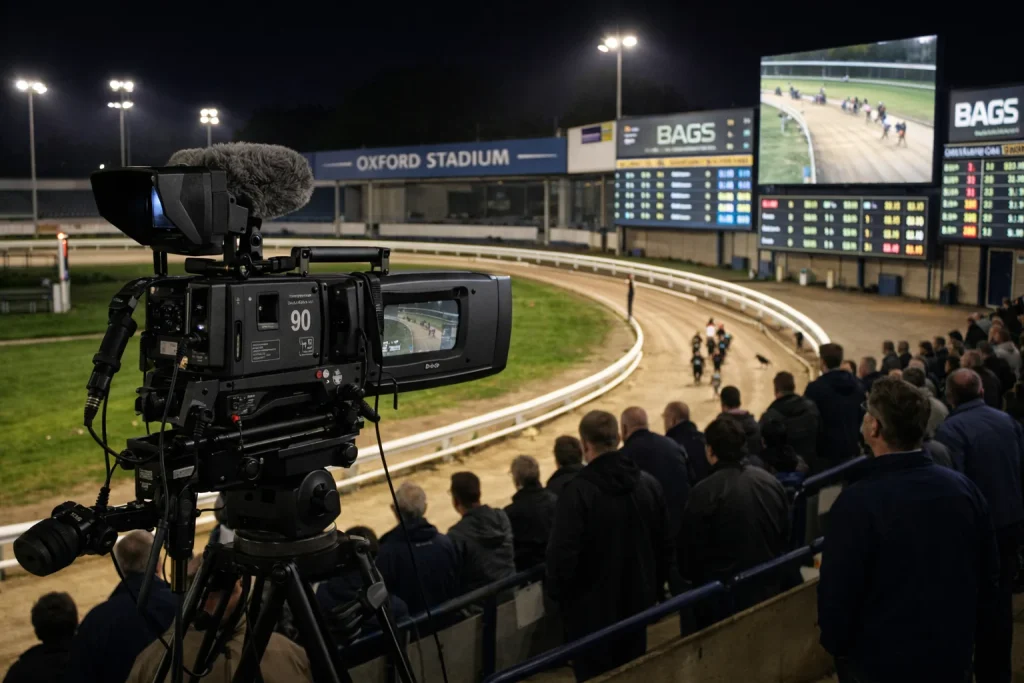
This article breaks down the BAGS system, outlines Oxford’s schedule within it, covers the television and streaming options bringing these races to screens nationwide, and examines how betting pool dynamics work differently at BAGS meetings compared to on-course events.
The wider context is set out in our Oxford greyhound results guide.
What Is BAGS?
BAGS stands for Bookmakers’ Afternoon Greyhound Service. The name describes exactly what it delivers: greyhound racing scheduled specifically for betting shops during afternoon hours when horse racing provides limited action. Bookmakers collectively fund these meetings to keep turnover flowing through their shops and online platforms throughout the day.
The system contracts with tracks nationwide to provide consistent racing coverage. According to GBGB data, seventeen tracks currently hold BAGS contracts, generating more than 25,000 races annually across the UK. This volume ensures that punters in any betting shop encounter regular opportunities to wager on live greyhound racing from mid-morning through early afternoon.
BAGS meetings follow standardised scheduling. First races typically start around 10:00 or 11:00, with cards running through until early evening racing takes over at tracks offering night meetings. The predictable timetable allows bookmakers to advertise coverage and lets bettors plan their day around known race times.
Prize money at BAGS meetings comes primarily from bookmaker contributions rather than on-course attendance revenue. This commercial relationship shapes the racing calendar, with tracks adjusting schedules to meet bookmaker demand rather than purely local crowd considerations. Oxford benefits from this arrangement, maintaining regular racing despite the absence of massive on-course attendance.
The BAGS framework ensures racing quality remains consistent. Tracks must meet minimum standards for field sizes, grading consistency, and broadcast infrastructure. This standardisation means punters can expect roughly comparable racing whether watching Oxford, Romford, or any other BAGS venue. The system homogenises the product while still allowing individual tracks to maintain their distinct characteristics and local form patterns.
Oxford’s BAGS Schedule
Oxford Stadium participates in the BAGS rota, hosting afternoon meetings that feed content to betting shops and streaming services across Britain. The specific days and times vary seasonally, with the track coordinating with other BAGS venues to avoid overlapping coverage that would split the betting audience.
A typical Oxford BAGS card features 12 to 14 races. The first race usually falls between 10:30 and 11:00, with subsequent races spaced at regular intervals of approximately 15 minutes. This pacing allows bettors to assess results, study the next racecard, and place wagers before traps open again.
Oxford combines BAGS afternoon meetings with evening cards on certain days. The afternoon session caters to the off-course market while evening racing attracts on-course attendance. Dogs appearing on afternoon cards rarely double up for evening races on the same day, keeping both sessions fresh and preventing fatigue-related performance drops.
Seasonal adjustments affect the schedule. Winter months may see earlier start times to maximise daylight, while summer cards can push later. Bank holidays and major horse racing fixtures sometimes shift greyhound schedules as bookmakers reallocate broadcast capacity. Checking the current week’s fixtures before planning wagers avoids confusion about when Oxford races next air through BAGS channels.
Since Oxford reopened in September 2022 after a decade-long closure, BAGS racing has played a central role in re-establishing the track’s fixture calendar. The bookmaker contracts provide financial stability while the stadium rebuilds its local following. Punters benefit from consistent coverage that previous generations of Oxford regulars could only access by attending in person.
TV & Streaming Coverage
SIS (Sports Information Services) broadcasts BAGS racing to betting shops nationwide. Every licensed bookmaker receives the feed, displaying races on screens throughout their retail premises. This coverage transformed greyhound racing from a track-attendance sport into a shop-based betting product accessible without travelling to any stadium.
Online streaming extends the reach further. Major bookmakers including Bet365, William Hill, Ladbrokes, and Coral offer live streams of BAGS meetings through their websites and apps. Account holders with funded balances or recent betting activity can watch Oxford races from anywhere with an internet connection. The streams typically run with minimal delay, allowing punters to follow the action in near-real-time.
RPGTV (Racing Post Greyhound TV) provides dedicated greyhound coverage including BAGS meetings. Available through Sky and Freeview, this channel shows racing alongside analysis, tipping, and interviews. Oxford features regularly on RPGTV’s broadcast schedule, offering an alternative viewing option beyond bookmaker streams.
The annual betting turnover on greyhound racing in the UK reaches approximately £740 million according to Gambling Commission data. BAGS racing accounts for a significant portion of this figure, demonstrating the commercial importance of weekday afternoon coverage to the broader industry. Oxford’s participation in BAGS ensures the track shares in this revenue stream regardless of local attendance patterns.
Betting Pool Dynamics
Pool betting at BAGS meetings operates differently from on-course tote pools. Off-course bettors wager through bookmakers who then lay off risk among themselves rather than contributing to a single track-based pool. This structure creates distinct dividend patterns compared to traditional tote betting.
Forecast and tricast dividends reflect national betting patterns rather than purely local money. When thousands of bettors across UK betting shops back the same combination, dividends compress. Conversely, unexpected results generate larger returns because fewer punters held the winning combination. This volatility attracts bettors seeking outsized payouts from correctly predicting unlikely finishes.
Starting prices at BAGS meetings respond to market forces in real-time. Early money shortens prices on fancied runners while late support can shift odds in the final minutes before the off. Unlike fixed-odds betting where you lock in a price at the moment of wager, SP bets settle at whatever odds prevail when traps open. Watching market movements before BAGS races reveals where sharp money flows.
Liquidity matters for big bets. BAGS meetings attract widespread betting interest, meaning larger stakes can be placed without dramatically moving the market. A £500 win bet at a small independent meeting might crash the odds; the same stake across BAGS pools barely registers. This depth suits serious punters who need to get money on without signalling their position to the market.
Each-way terms typically offer quarter the odds for a place at BAGS meetings. Understanding how this affects returns helps calculate expected value. A dog at 8/1 each way pays 8/1 to win plus 2/1 for placing. When assessing forecast and tricast combinations, knowing the likely dividend range based on historical BAGS payouts at Oxford helps set realistic expectations for returns.
Conclusion
BAGS racing keeps Oxford Stadium on screens nationwide throughout the afternoon. The system connects bookmakers, broadcasters, and bettors into an ecosystem that supports regular racing regardless of on-course attendance. Understanding how BAGS works, when Oxford races appear, and how betting pools behave at these meetings equips you to engage more effectively with this daily fixture of UK greyhound racing.
The commercial infrastructure that BAGS provides has become essential to Oxford’s operations. Bookmaker contributions through the BAGS contract ensure consistent scheduling and prize money that attracts quality greyhounds and competitive fields. For punters, this means reliable access to Oxford racing through any high-street bookmaker or streaming platform, making form analysis and regular betting practical regardless of geography.
The evening alternative is covered in evening racing.
