
Greyhound Racing Betting Turnover: £740m Industry Economics
 Available in US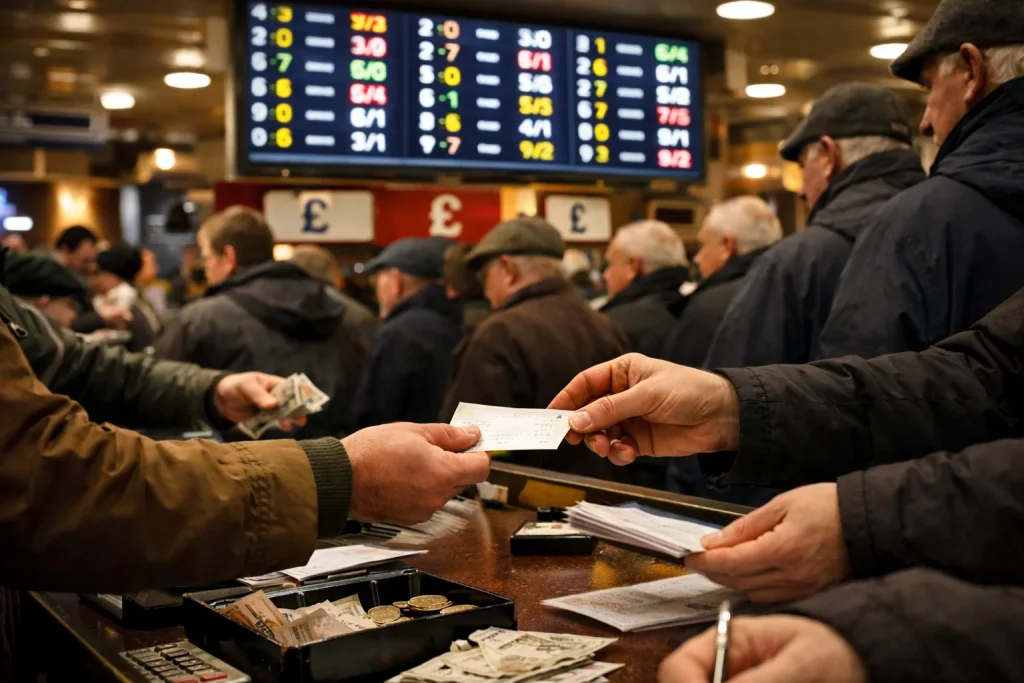
British greyhound racing processes approximately £740 million in annual betting turnover according to Gambling Commission data. This figure encompasses bets placed through bookmakers, Tote pools, and online platforms. It represents the total amount wagered, not the industry’s take—most of that money returns to bettors as winnings.
This guide examines where those betting pounds come from, how they flow through the industry, and why recent developments threaten the financial model that sustains tracks like Oxford Stadium.
The wider context is set out in our Oxford greyhound results guide.
How the Numbers Break Down
The £740 million turnover figure captures betting across all channels. High-street bookmaker shops, once the dominant venue for greyhound wagers, now compete with online platforms that offer convenience and broader market access. The balance has shifted decisively toward digital betting, though physical shops retain a loyal customer base.
Pool betting through the Tote contributes a portion of this total. When bettors place forecasts, tricasts, or jackpot bets at tracks like Oxford, their stakes enter collective pools that determine dividends. The Tote retains a percentage before distributing winnings, with some of that retention flowing back to racecourses and the industry.
Historical comparison provides perspective. A 2014 Deloitte study estimated off-course betting turnover on greyhounds at £1.3 billion during the 2012-2013 period. If accurate, the current £740 million figure suggests substantial decline—though methodological differences between studies complicate direct comparison. What seems clear is that greyhound betting, while substantial, commands a smaller share of gambling activity than it once did.
The turnover figure excludes several economic contributions. Admission fees, food and beverage sales, hospitality packages, and sponsorship revenues all add to industry income without appearing in betting statistics. These ancillary revenues matter more at flagship venues than at BAGS tracks like Oxford, where remote betting generates most financial activity.
Online betting’s growth has shifted where turnover originates. Mobile apps and betting websites now capture wagers that once occurred in physical shops. This digitalisation affects how bettors engage with the sport—and how revenues flow through the industry ecosystem.
How Betting Funds the Sport
Betting turnover translates to track revenues through several mechanisms. Bookmakers pay for the right to broadcast races and offer markets on them. These media rights fees flow directly to tracks, providing guaranteed income regardless of on-course attendance. For BAGS tracks like Oxford, media rights represent the primary revenue stream.
The BAGS system (Bookmakers’ Afternoon Greyhound Service) coordinates this arrangement. Participating tracks stage races according to schedules that maximise betting shop coverage, receiving payments in return. A track that races regularly under BAGS contracts enjoys predictable income; one excluded from the system faces financial precarity.
Pool betting revenues follow different paths. The Tote’s retention from pools funds prize money, track operations, and welfare programmes. When bettors place tricast combinations at Oxford, a portion of their stakes ultimately supports greyhound retirement schemes, injury recovery funds, and track maintenance—whether they realise it or not.
The relationship between betting volume and track viability is direct. Tracks that generate more betting interest command higher media fees and larger pool sizes. Those that fail to attract wagering activity struggle to justify their position in broadcasters’ schedules. This economic reality shapes everything from race scheduling to grading decisions.
Bookmaker Payments
British bookmakers contribute to greyhound racing through negotiated payments that reflect the betting value the sport provides. These contributions fund prize money, welfare programmes, and track operations. Without bookmaker payments, most British tracks would be financially unviable—admission fees and on-course spending alone cannot sustain modern operations.
The contribution model has evolved over time. Voluntary agreements preceded statutory frameworks, and the current arrangements continue to reflect negotiation between industry bodies and major bookmaking firms. What percentage of betting turnover reaches the sport depends on these commercial negotiations rather than fixed formulas.
Recent changes to gambling taxation have pressured this model. Increased tax burdens on bookmakers reduce their capacity or willingness to maintain payments to racing. GBGB CEO Mark Bird has warned about the consequences: “We are already half a million down on where we were last year… the impact [of new taxes] on greyhound racing, which relies in a major way on contributions by bookmakers, will lead to the demise of the sport.”
The warning reflects genuine concern. If bookmaker contributions decline while costs remain stable or increase, tracks face difficult choices. Reduced prize money discourages trainer participation; deferred maintenance degrades facilities; welfare programme cuts damage the sport’s reputation. The financial pressure is not theoretical.
Threats to the Model
Several developments challenge greyhound racing’s economic foundations. Online gambling’s growth benefits platforms rather than physical venues. A bet placed via smartphone at home generates media rights income but no admission fee, no bar spend, no hospitality package purchase. The shift to digital betting hollows out on-course revenues while preserving only the media rights component.
Competition from other betting markets intensifies pressure. Football, tennis, and esports all compete for gambling attention. A bettor has finite time and money; pounds wagered on Premier League matches are pounds not wagered on greyhound races. As alternative markets proliferate, greyhound racing’s share of overall betting activity may continue declining.
Regulatory tightening adds further pressure. Responsible gambling initiatives, stake limits, and advertising restrictions all aim to reduce problem gambling but inevitably constrain industry revenues. A sport dependent on betting cannot welcome measures that reduce betting activity, however well-intentioned those measures may be.
The survival of tracks like Oxford depends on navigating these pressures while maintaining racing quality. Cost control, operational efficiency, and retention of betting interest all matter. The £740 million in annual turnover sustains the current industry structure—but that figure is not guaranteed to remain stable.
Demographic shifts add uncertainty. Younger bettors may have less attachment to greyhound racing than older generations who grew up with the sport. Maintaining betting interest requires attracting new participants, not merely retaining existing ones. Whether the industry can accomplish this remains an open question.
Following the Money
Every bet placed on greyhound racing contributes to an economic system that sustains tracks, trainers, and welfare programmes. The £740 million flowing through British greyhound betting annually represents both the industry’s foundation and its vulnerability. That money funds Oxford Stadium’s operations, supports the greyhounds racing there, and enables the betting markets punters engage with.
Understanding these economics adds dimension to the betting experience. The tricast ticket purchased for Saturday’s card does not simply represent a wager—it is a micro-contribution to an industry trying to sustain itself against mounting pressures. Whether that industry deserves support is a separate question. That it depends on such support is simply fact.
Some of it returns as trainer development grants.
The £740 million turnover sustains tracks, trainers, and welfare programmes across Britain. Each bet placed at Oxford or on Oxford races contributes fractionally to this total. For bettors, that context adds meaning beyond individual wins and losses—it connects personal wagering to an industry’s survival.
