
Oxford Greyhound Sectional Times: What Early Pace Reveals About Form
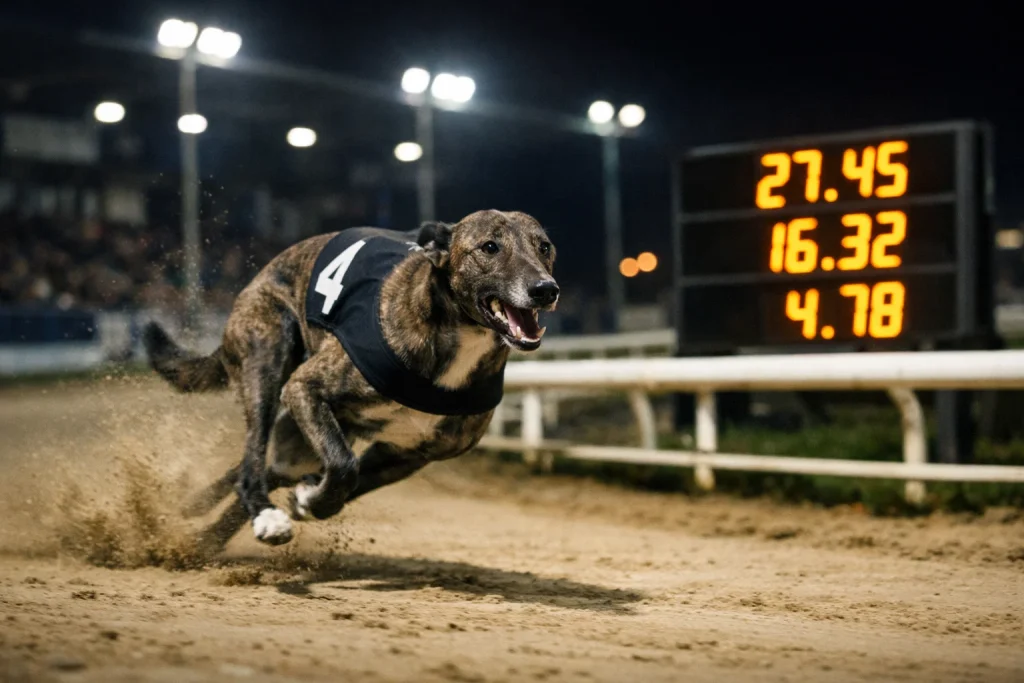
Raw finishing times tell you who won. Sectional times tell you why. At Oxford Stadium, where the 379-metre circumference creates tight bends and compressed racing lines, understanding how a greyhound breaks from the traps, navigates the first turn, and closes through the run-in separates casual observation from genuine form analysis.
Most punters glance at calculated times and move on. The sharper ones dig into sectional breakdowns, looking for patterns that reveal whether a dog’s headline performance was a true reflection of ability or a product of favourable circumstances. A greyhound that posts 28.50 seconds over 450 metres might be an early burner who faded, or a strong finisher who overcame a slow start. The sectional split is the only way to know which.
This breakdown covers what sectional times actually measure, how Oxford’s track configuration shapes those numbers, and how to apply this data when assessing form. The goal is practical: by the end, you should be able to look at a racecard and understand not just who ran fast, but how they ran fast.
What Are Sectional Times?
Sectional times divide a race into measurable segments, typically recording how long a greyhound takes to reach specific points on the track. The standard breakdown includes the time to the first bend, through the bends, and the final run-in to the finish line. These splits transform a single finishing time into a narrative.
The first sectional—often called early pace or trap-to-turn time—captures how quickly a dog leaves the boxes and reaches the first corner. This matters because greyhound racing rewards early position. According to Timeform’s analysis, the dog leading at the first bend wins approximately 35% of races, a figure that climbs higher at tracks with tighter turns where passing opportunities diminish.
The middle sectional covers the bend work itself, measuring how a greyhound handles the turns. Some dogs maintain pace through corners; others drift wide and lose ground. The final split—the run-in—reveals finishing speed, showing which dogs accelerate when others tire.
Timeform’s methodology explains that sectional data allows punters to identify pace styles and predict how races might unfold based on the early speed profiles of each runner. Their ratings system, which scales from 0 to 140, incorporates sectional analysis to assess true ability rather than relying solely on finishing times. A race with multiple early-pace dogs often produces a different outcome than one where the closers are grouped together, and sectional data reveals these dynamics before the race begins.
Oxford Sectional Breakdown
Oxford’s track geometry shapes its sectional profile. The 379-metre circumference—verified by Dog Track Guide—is tighter than larger circuits like Monmore or Towcester, meaning bends arrive sooner and require sharper turns. The first bend sits 108 metres from the start line, which compresses the early running and places a premium on trap speed.
Over the standard 450-metre distance, sectional splits at Oxford typically break down into three phases. The trap-to-first-bend segment covers roughly the first 108 metres and usually takes between 5.8 and 6.2 seconds for graded runners. This phase reveals raw early pace—the natural break speed that’s difficult to train and largely innate to each dog.
The bend phase covers approximately 180 metres through both turns. At Oxford, tighter bends favour inside-running dogs who maintain rail position, while wider runners lose ground travelling extra distance. A tenth of a second lost on each bend compounds quickly.
The final run-in from the last bend to the finish line spans roughly 160 metres. This segment separates true stayers from early-pace specialists. Dogs that post strong run-in times often appear to be accelerating while others fade, though in reality they’re simply maintaining pace while the front-runners tire.
The Swaffham hare system used at Oxford maintains consistent lure speed, which helps standardise sectional comparisons across meetings. Unlike some older tracks where hare speed varies, Oxford’s mechanised system provides reliable benchmarks for comparing performances week to week.
Early Pace vs Finishing Speed
Greyhounds generally fall into three pace categories: early-pace dogs, strong finishers, and balanced runners who perform consistently throughout. Identifying which type you’re dealing with requires comparing the first sectional against the run-in split.
Early-pace dogs post fast trap-to-turn times but often record slower run-in splits relative to the field. They front-run when clear but struggle when crowded or challenged early. These dogs benefit from inside traps at Oxford, where the short run to the first bend allows them to establish position before the pack converges.
Strong finishers show the opposite profile: moderate early sectionals followed by rapid run-in times. These dogs need clear running room entering the home straight. At Oxford, they often perform better from middle or outside traps where they can swing wide on the final bend and accelerate into space.
Balanced runners show consistent sectionals throughout, neither blazing early nor storming home. They’re reliable but rarely explosive. In competitive graded races, they often finish in the placings without winning—useful for forecast and tricast betting but less attractive for win selections.
The key is matching pace type to race conditions. A six-dog race with three early-pace runners from inside traps usually produces early crowding and potential for interference, which benefits closers who can avoid trouble. Conversely, a race with only one confirmed front-runner and five closers hands the early-pace dog a soft lead.
Using Sectionals for Betting
Sectional data becomes actionable when combined with trap draws and field composition. Start by identifying each runner’s pace profile from recent performances. Note which dogs consistently show fast early splits and which close strongly. Then overlay this information onto the actual trap assignments.
When two early-pace dogs occupy adjacent inside traps, expect them to challenge each other to the bend. This often results in both dogs compromising their positions, opening opportunities for the runners behind. The beneficiaries are typically the strong finishers who avoid the early scrum.
Calculated times—the adjusted figures that account for going allowance—provide the headline, but sectionals reveal the subtext. A dog might post an improved calculated time after a front-running effort where no one challenged. The sectional split would show fast early pace but pedestrian finishing splits, suggesting the performance isn’t repeatable against sharper early competition.
Conversely, a dog that finished fourth but posted the fastest run-in sectional in the race might be worth backing next time with a better draw. The finishing time looked ordinary; the sectional revealed ability that circumstances masked.
The practical workflow is straightforward: review sectionals from recent runs, categorise each dog’s pace style, assess how the trap draw favours or hinders each style, and identify the likely shape of the race. Dogs positioned to get an uncontested lead or a clear run entering the straight deserve closer attention.
Conclusion
Sectional times transform greyhound form analysis from guesswork into structured assessment. At Oxford, where the compact 379-metre circumference amplifies the importance of early positioning, understanding how dogs break and run through the splits is essential for serious form study.
The numbers themselves are simple enough—time to first bend, bend work, run-in. What matters is using them systematically: identifying pace profiles, anticipating race shape, and finding value where headline times obscure underlying ability. That’s where sectional breakdown at Oxford earns its keep.