
Evening Racing at Oxford Stadium: Night Meetings & Visitor Guide
 Available in US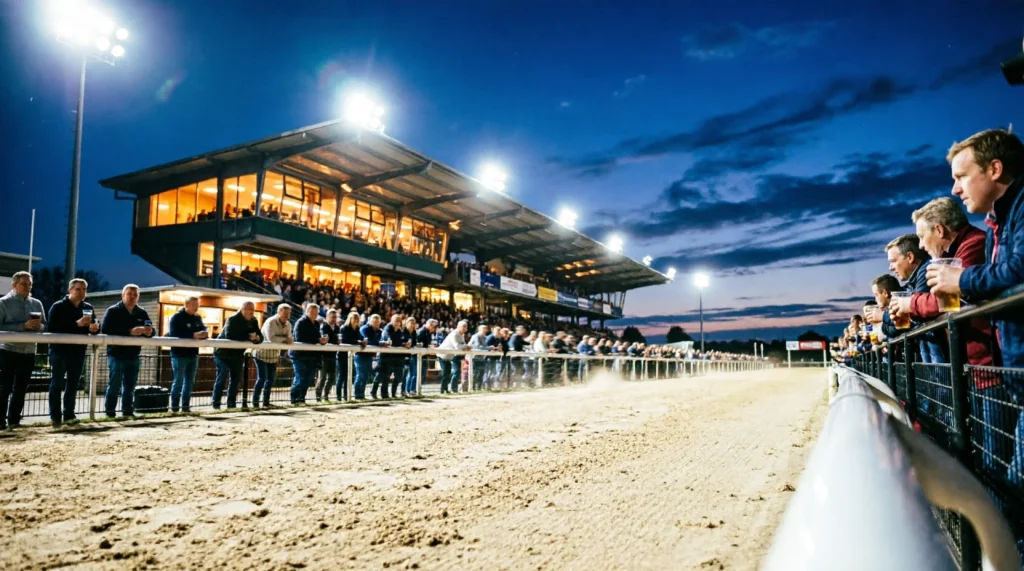
The evening format suits greyhound racing particularly well. After-work scheduling means attendees can arrive without taking time off. The floodlights transform the track into a spectacle that daytime racing lacks. And the social aspect—drinks, food, company—integrates naturally with the racing itself rather than competing against it. For visitors considering their first trip to Oxford Stadium, or regulars planning their next evening out, this guide covers what to expect.
The wider context is set out in our Oxford greyhound results guide.
Evening Schedule
Oxford Stadium typically schedules evening meetings with first race times around 19:00 or 19:30, allowing arrivals after standard working hours. The exact timing varies by meeting, and checking the day’s racecard before travelling is advisable. Meetings generally feature between ten and fourteen races, with intervals of approximately fifteen minutes between each event. A full evening’s racing concludes somewhere around 22:00 to 22:30.
The stadium operates under BAGS contracts—meaning most races are broadcast to betting shops and online platforms across the country. Seventeen tracks across Britain hold BAGS agreements, generating over 25,000 races annually for the off-course betting market. For on-course visitors, the BAGS connection is largely invisible; the racing happens regardless of how many are watching remotely.
Evening fixtures run throughout the week, though frequency varies with the broader racing calendar and operational decisions. Some weeks may feature multiple evening cards; others may concentrate racing into fewer slots. The stadium’s website and racing press publish schedules in advance, and regular punters quickly learn the typical patterns. Spontaneous visits are possible, but confirming that evening racing is actually scheduled prevents wasted journeys.
The racing itself covers Oxford’s full range of distances, from 250-metre sprints to 1040-metre marathons, though most graded races run over the standard 450 metres. Evening cards mix open races with graded events, providing variety for those watching multiple races. The grade structure—A1 down through A11—ensures that greyhounds compete against appropriate opposition, with promotions and demotions based on recent performance.
Atmosphere and Experience
Greyhound racing under floodlights has a particular quality that photographs struggle to capture. The track surface illuminated against the darkening sky, the tension as greyhounds enter the traps, the roar of the chase—these elements combine into an experience quite different from afternoon racing at the same venue. The reduced visibility of the surrounding area focuses attention on the track itself, creating an intensity that daylight dilutes.
Oxford’s evening atmosphere reflects its audience. Weekday meetings tend toward regular punters with specific betting objectives; Friday and Saturday evenings draw a broader mix including groups on nights out, couples seeking alternatives to standard entertainment, and families with older children. The stadium accommodates all of these, though the balance shifts meeting by meeting. Big racing nights with special events attract larger crowds and a more celebratory mood.
The pace of evening racing suits social interaction. Fifteen minutes between races provides time to discuss selections, analyse form, queue for refreshments, and debate the previous result. Unlike sports that demand constant attention for extended periods, greyhound racing offers natural breaks that make it compatible with conversation and company. The betting element adds a shared stake in outcomes without requiring expertise—anyone can pick a trap number and cheer their selection home.
For serious punters, the atmosphere matters less than the racing itself. Evening conditions at Oxford—cooler temperatures after summer days, potentially different track surface behaviour than afternoon meetings—become factors in analysis. Some greyhounds perform better under lights than in daylight, whether due to temperature preferences or other variables. Experienced punters note these patterns alongside standard form considerations.
Facilities and Hospitality
Oxford Stadium’s facilities reflect its post-2022 renovation. The bar and restaurant areas were refurbished during the reopening process, aiming to attract visitors who expect reasonable comfort alongside their racing. Food and drink options go beyond the minimal provisions of some older venues, with meals available throughout meetings and licensed bars serving until racing concludes.
Trackside viewing positions let visitors watch races from rail-level, bringing them closer to the action than elevated seating might allow. The visceral experience of greyhounds sprinting past at full pace—the sound, the speed, the competitive drama—rewards standing near the track for at least some races. Those preferring more comfortable viewing can find seating areas with sightlines to the track and access to screens showing race coverage.
Betting facilities include on-course bookmakers and tote windows, with cash wagering still standard despite the broader shift toward online platforms. The tote pools—forecast and tricast particularly—often provide value when on-course contributions are modest, though pool sizes vary by meeting. Mobile betting apps allow punters to access better odds where available, though signal coverage inside the stadium may require checking in advance.
Hospitality packages offer an enhanced experience for groups or special occasions. These typically include reserved seating, meals, and sometimes paddock access. Pricing and availability vary, and advance booking is generally required. For casual visits, general admission provides access to public areas without the need for pre-arrangement—simply turn up, pay at the gate, and find a spot to watch the racing.
Getting There
Oxford Stadium sits in the Cowley area, east of the city centre. By car, the stadium is accessible from the Oxford ring road, with parking available on site. Evening meetings mean arriving in the tail end of rush hour on weekdays, so allowing extra time for traffic during peak periods prevents missing early races. Parking fills on busier nights, arriving early secures convenient spaces.
Public transport options include bus services from Oxford city centre, though checking evening schedules is essential—service frequency drops after rush hour, and return journeys require attention to last-bus times. Those staying in Oxford itself may find taxis or ride-sharing more convenient for evening visits, particularly when planning to stay until racing concludes. The stadium’s Cowley location is close enough to the city centre that taxi fares remain reasonable.
For visitors from outside Oxfordshire, Oxford has good rail connections to London and other major centres. Oxford railway station is approximately three miles from the stadium, making taxis the practical onward connection. Combining an evening’s racing with a day in Oxford itself creates a fuller itinerary for those travelling specifically for the dogs.
Making the Most of Your Visit
Evening racing at Oxford Stadium works as entertainment, as sport, and as social occasion simultaneously. Approach it with clear expectations—this is not a high-end hospitality venue, but neither is it a relic of faded grandeur. The stadium’s post-2022 facilities serve their purpose competently, and the racing itself delivers genuine excitement for those who engage with it.
The full calendar is in the fixtures and schedule.
For first-time visitors, arriving early enough to settle in before the first race reduces the rush and allows exploration of the venue. Bringing cash simplifies betting transactions. Checking the racecard beforehand—either online or purchased on arrival—makes informed selections possible rather than relying purely on trap numbers or dog names. And staying flexible about results keeps the evening enjoyable regardless of betting outcomes. The dogs will run; the traps will open; the winner will cross the line first. Everything else is detail.
