
Oxford 845m & 1040m Stayers: Long Distance Racing Analysis
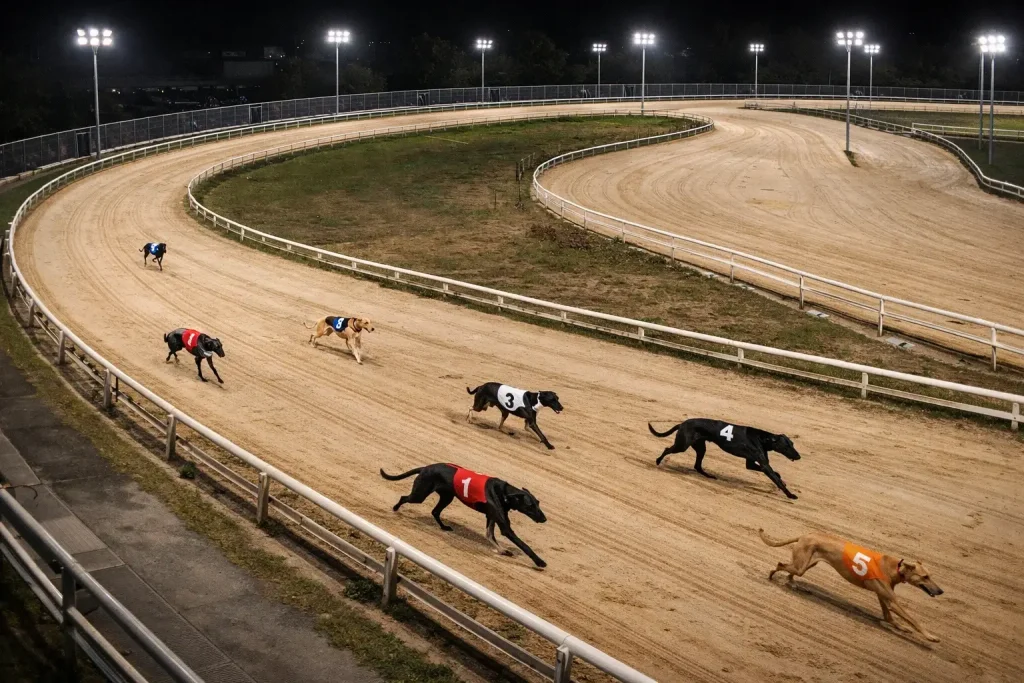
Long distance racing at Oxford Stadium tests qualities that sprints and middle distances never reveal. The 845m and 1040m trips demand endurance, tactical awareness, and the mental fortitude to maintain effort through multiple bends while rivals fade. These marathon events attract a different breed of greyhound: dogs who lack the explosive pace for shorter trips but possess the stamina to outlast faster rivals over extended journeys.
Oxford offers distances from 250m to 1040m, placing its staying events at the upper end of UK greyhound racing. According to Dog Track Guide, the 845m and 1040m trips feature multiple circuits of the 379-metre track, creating races where early positioning matters less than sustainable pace. Understanding what separates successful stayers from pretenders transforms how you approach these specialist events.
Stayer Characteristics
Genuine stayers share physical and behavioural traits that distinguish them from speed-oriented greyhounds. They tend to be slightly heavier, carrying the muscle mass needed for sustained effort rather than the lean frames built for acceleration. Their stride patterns favour efficiency over explosiveness, covering ground economically rather than burning energy in early bursts.
Temperament plays a crucial role. Stayers must settle into races without wasting energy fighting for early position. Dogs who race keenly, pushing hard from the traps regardless of distance, often tire before marathon trips conclude. The best stayers relax through the opening circuits, conserving reserves for decisive moves in the closing stages when rivals begin to falter.
Pedigree offers clues. Certain bloodlines produce reliable stayers generation after generation, passing down the combination of stamina, intelligence, and race craft that long distances demand. Trainers familiar with these lines often identify staying potential early, developing dogs specifically for the 845m and 1040m trips rather than forcing sprinters to extend beyond their natural range.
Recovery between races takes longer for stayers. The physical demands of marathon racing require extended rest periods compared to sprint specialists who can bounce back quickly. A dog racing 250m can compete again within days; a 1040m runner needs significantly more time to recover fully. GBGB welfare data shows injury rates across all distances at a record low of 1.07% in 2026, with longer-distance specialists benefiting from improved track maintenance protocols developed in partnership with the Sports Turf Research Institute. This scheduling reality means stayers race less frequently, making each performance more significant for form assessment and increasing the importance of tracking individual greyhounds across extended periods.
845m vs 1040m Demands
The 200 metres separating these distances creates meaningful differences in race dynamics. At 845m, dogs complete just over two laps of Oxford’s 379-metre circumference, negotiating four bends before the finish. The trip rewards greyhounds with solid stamina who can maintain pace through multiple turns without dramatic late surges.
The 1040m extends to nearly three full laps, adding two more bends and substantially more ground. This distance exposes any weakness in staying power ruthlessly. Dogs who cope adequately at 845m sometimes struggle when asked for the extra 200 metres. The final lap becomes a war of attrition where superior conditioning separates finishers from those who simply complete the course.
Tactical approaches differ between distances. At 845m, a prominent racer with reasonable stamina can dictate from the front throughout. At 1040m, such tactics often lead to dramatic fading in the final circuit. Patient runners who track leaders through the early stages before striking in the closing 200 metres frequently prevail over front-running types whose stamina reserves empty too soon.
Field sizes tend to be smaller at these distances. Fewer greyhounds possess genuine staying ability, so trainers have smaller pools to draw from. With approximately 15,000 active racing greyhounds in the UK, only a fraction possess the stamina profiles suited to marathon trips. This concentration of specialists means races often feature familiar rivals meeting repeatedly, building head-to-head records that inform future assessments.
Trap Draw at Distance
Trap bias diminishes at staying distances compared to sprints. The extended race duration gives wide-drawn dogs ample opportunity to find position, negating the inside rail advantages that dominate shorter trips. A Trap 6 dog with genuine stamina loses little compared to a Trap 1 rival over 1040m because so much racing remains after any early positional disadvantage.
However, first-bend crowding still matters. Six dogs converging on the opening turn creates interference regardless of distance. Greyhounds who handle traffic well, maintaining composure when bumped or checked, gain advantages over those who lose momentum or become discouraged by contact. Trap draw influences first-bend experience, even if its ultimate impact on finishing position lessens over marathon trips.
Inside traps benefit dogs who prefer rail position throughout. Some stayers race most efficiently when hugging the inside line, minimising distance travelled across multiple circuits. If such a dog draws wide, it must either cross early, expending energy, or race wide throughout, covering extra ground that accumulates significantly over 1040m.
Study how specific dogs have performed from different traps over staying distances. Track-specific patterns emerge: certain greyhounds consistently underperform from wide draws at Oxford despite showing strong form from inside positions. These tendencies matter when the same dog appears in varying trap allocations across meetings.
Betting Long Distance
Staying races reward patient form analysis more than any other distance category. The smaller fields and specialist nature of participants mean form holds more reliably than in crowded sprint contests. A dog who has proven its stamina over 1040m at Oxford enters future races with established credentials; no guesswork about trip suitability remains.
Win betting often provides better value than forecast markets at staying distances. The compressed fields and predictable nature of staying form mean identifying a single winner becomes more achievable than correctly sequencing the first two finishers. When three genuine stayers face three exposed as lacking stamina, the race divides naturally into contenders and also-rans, simplifying the puzzle.
Watch for fitness indicators more closely than at sprint distances. Stayers who return from breaks need race sharpness that trials alone cannot provide. A dog’s first run back after layoff often falls below its best, even if underlying ability remains fully intact. The second or third run following a break typically shows truer form as race fitness returns and the greyhound remembers the competitive rhythm of genuine racing.
Consider the going carefully. Rain-softened tracks add to the stamina demands of already taxing distances. Greyhounds who cope at 1040m on fast going might struggle when conditions turn heavy, adding resistance that their reserves cannot absorb. Conversely, dogs with exceptional staying power sometimes improve relative to rivals when going tests stamina to the maximum, exposing the limitations of competitors who merely stayed adequately on faster surfaces.
Oxford’s staying events, though scheduled less frequently than standard 450m races, offer opportunities for punters who specialise in this niche. Track the small pool of genuine stayers who race regularly at these distances, noting how they perform against each other across varying conditions. Familiarity with these specialist greyhounds builds predictive accuracy that occasional observers cannot match.
Conclusion
The 845m and 1040m distances at Oxford Stadium represent greyhound racing at its most demanding. Dogs need stamina, tactical intelligence, and the physical constitution to sustain effort through multiple laps. These specialist events attract smaller fields of proven stayers, creating races where form analysis identifies likely winners more reliably than at shorter, more chaotic distances.
Approach staying races as distinct from sprint and middle-distance events. The form factors that matter differ: stamina trumps pace, recovery time between runs increases, and trap draw advantages diminish over extended journeys. If you identify genuine stayers and track their Oxford-specific form, you find betting opportunities that reward detailed analysis over casual observation.