Oxford Trial Results: What Grading Trials Reveal About New Dogs
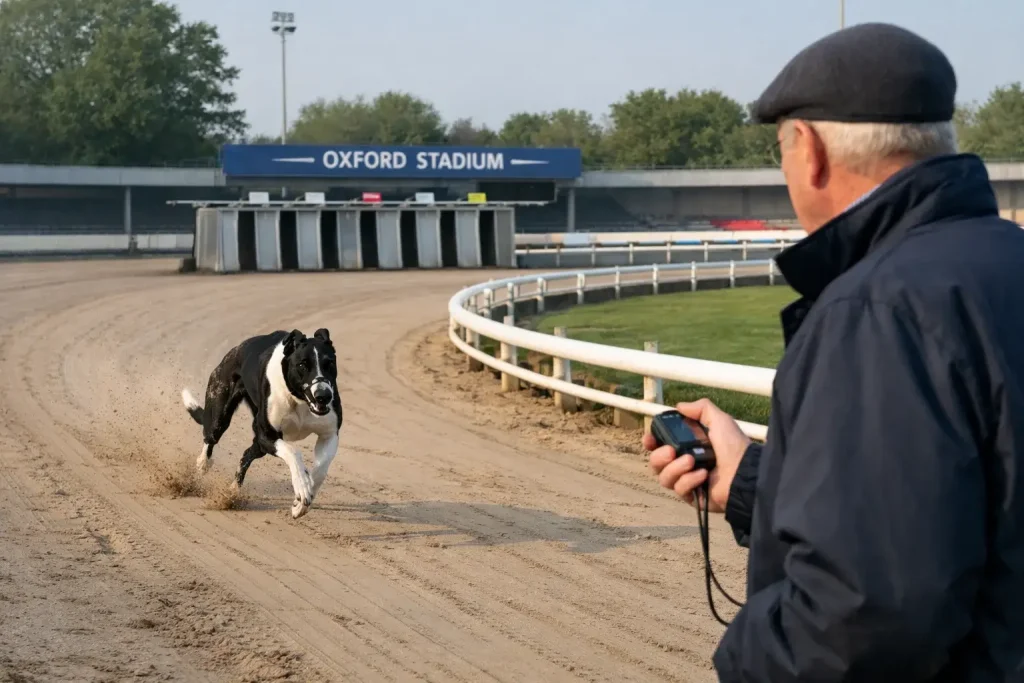
Before any greyhound races competitively at Oxford Stadium, it faces a grading trial. This assessment run determines where the dog enters the grading ladder, establishing the baseline against which future performances will be measured. For punters studying newcomers to the track, trial results at Oxford Stadium offer the first—and sometimes only—data point available.
Trials differ from racing in important ways. There’s no competition for position, no crowding at bends, no tactical element. The dog runs alone or in a small group, chasing the hare at its natural pace. What emerges is a raw time that reflects ability under controlled conditions, though translating that figure into race expectations requires understanding what trials can and cannot reveal.
Oxford Stadium reopened in September 2022 after a decade-long closure, bringing with it refreshed facilities and updated procedures. Since then, the track has established consistent trial protocols that form the basis for grading dogs new to the venue. This breakdown covers how those trial runs at Oxford Stadium work and what the results tell you.
What Are Grading Trials?
A grading trial is an official timed run over a standard distance, conducted before a greyhound enters competitive racing at a track. The trial establishes the dog’s calculated time, which determines its initial grade placement. Without a trial, the racing office has no basis for slotting an unknown dog into the grading structure.
New dogs to Oxford—whether young greyhounds entering racing for the first time, dogs transferring from other tracks, or animals returning after injury layoffs—all require trial runs. The trial provides benchmark data that the racing office uses to ensure competitive racing by matching dogs of similar ability.
Trials are distinct from schooling runs, where dogs simply practice starting from traps and chasing the hare without official timing. Schooling teaches track familiarity; trials assess ability. A dog might complete several schooling runs before its official grading trial, learning the track’s bends and surface before the clock starts.
For trainers, trials represent the formal gateway to racing. The trial time sets expectations and determines which grade races the dog can enter. A fast trial earns a higher starting grade; a moderate trial places the dog in middle grades. With only 21 GBGB-licensed tracks remaining in the UK, accurate grading across venues ensures dogs transferring to Oxford from other tracks slot into appropriate competition levels. The goal is accurate grading—placing the dog where it will face genuine competition rather than dominate weak fields or struggle against superior opposition.
How Oxford Conducts Trials
Oxford Stadium conducts trials during designated trial sessions, typically before regular racing meetings. Dogs are assigned trap numbers and run over the standard 450-metre distance—the same trip used for most graded racing. This ensures trial times translate directly to race expectations without distance-based adjustments.
The trial itself resembles a race in mechanics. Dogs load into traps, the hare runs, and timing begins when traps open. The key difference is field composition: trials might feature solo runs or small groups of two to three dogs, reducing competitive interference. The aim is measuring natural ability, not race craft.
Timekeepers record the actual finishing time, then apply the going allowance to produce a calculated time. This calculated figure determines grade placement. Oxford uses standard grading bands—the same ranges that govern race entries—so a trial producing a 28.50 calculated time slots into whichever grade encompasses that figure.
The track also assesses running style during trials. Does the dog break sharply and lead? Does it settle and finish strongly? Does it run the rail or drift wide on bends? These observations don’t affect grade placement but inform trap allocation for the dog’s first races. A rail-running type might draw inside traps; a wide runner might suit outside boxes.
Oxford’s six racing distances—250, 450, 595, 645, 845, and 1040 metres—each represent different demands. Some dogs trial over non-standard distances if trainers believe a particular trip suits their running style, though 450m remains the default for grading purposes. With favourites winning approximately 35.67% of graded races across UK tracks, accurate trial assessment helps ensure new dogs are placed where they face appropriate competition.
Reading Trial Results
Trial results appear in form records alongside competitive race data, typically marked with a ‘T’ or similar notation to indicate the run wasn’t against full opposition. When studying a newcomer’s form, the trial line provides the baseline reading.
Compare the trial time to typical times for the assigned grade. A dog trialling at 28.40 and placed in A5 should run competitive times against A5 opposition. If the trial seems fast for the grade, the dog might have upside—room to outperform against dogs its grading suggests are equals. If the trial looks slow for the grade, expect early struggles before either the dog improves or drops to a more suitable level.
Trial conditions matter. A trial on fast going produces quicker raw times than one on slow going, though calculated times should account for this. Check whether the trial was solo or in company—some dogs run faster when chasing rivals, others perform better alone. Note the trap used, as some dogs show clear trap preferences that affect their times.
Trial form has limitations. Dogs can produce misleading trials for various reasons: unfamiliarity with the track, poor trap behaviour, illness, or simply underperformance on the day. A single trial run is a snapshot, not a complete picture. The first few competitive races often reveal more about true ability than the trial alone.
Trials to Racing: What Changes
Moving from trials to competitive racing introduces variables that trials don’t test. Six dogs fighting for position at the first bend creates crowding that solo trials never replicate. Dogs that break cleanly in trials might hesitate when rivals crowd their space. Wide-running dogs face extra distance in races that trials don’t penalise.
Early race experience often produces times slower than trial times, particularly for young or inexperienced dogs. The adjustment to competition takes several runs. A dog that trialled 28.40 but races 28.80 in its first start isn’t necessarily disappointing—it’s encountering race-day reality for the first time.
Some dogs improve markedly from trial to racing. The competitive element suits their temperament; they run harder when chasing rivals than when chasing only the hare. These dogs often exceed grade expectations once they settle into racing patterns.
Others regress. Dogs that produced fast, clean trial runs may struggle with the physical contact and positional battles of racing. Their trial form looked better than their racing form because trials removed the variables they handle poorly. Identifying which dogs belong in which category requires watching their early races carefully.
For bettors, dogs making early race starts deserve caution until they’ve demonstrated they can handle competition. The trial is a guide, but the first three or four competitive runs reveal whether that guide was accurate. Form study properly begins after the transition from trial to racing completes.
Conclusion
Trial results provide the starting point for assessing newcomers to Oxford Stadium. They establish grade placement, offer baseline time data, and suggest running style. What they don’t provide is proof of competitive racing ability—that only emerges through actual races against opposition.
Treat trial form as useful but provisional. The real test comes when the dog faces six-dog fields, contested bends, and the pressure of competition. With Oxford running distances from 250m to 1040m, trial assessment helps identify which trip might suit each greyhound before they enter full competitive action.
Trial runs at Oxford Stadium are the introduction; the races that follow tell the full story. Patient punters wait for two or three competitive runs before committing serious stakes to newcomers, using trial data as context rather than conviction.