
Going Allowance at Oxford Stadium: How Weather Affects Race Times
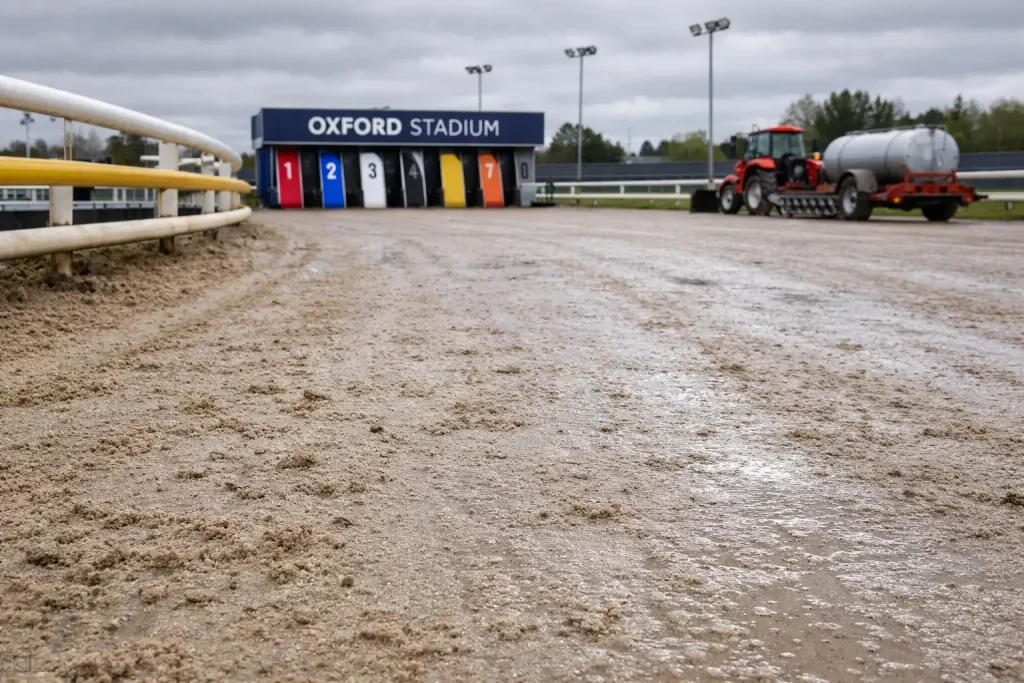
A greyhound posts 28.50 seconds over 450 metres at Oxford on a dry Tuesday evening. A week later, it runs 28.80 on a rain-affected card. Did the dog run slower, or did the track run slower? Going allowance answers that question, converting raw times into standardised figures that allow fair comparison across different conditions.
Every track surface plays differently depending on weather. Rain slows sand tracks; dry spells can make them faster than standard. Temperature affects muscle response and running surface alike. Without adjustment for these variables, form study becomes guesswork—you’d be comparing performances run under fundamentally different conditions as if they were equivalent.
This breakdown covers how going allowance works at Oxford, what the adjustment tells you, and how to apply the information when adjusting for conditions at Oxford. The goal is practical: understanding when a headline time reflects genuine ability versus favourable conditions.
What Is Going Allowance?
Going allowance is a time adjustment applied to raw finishing times to account for track conditions on a given day. The adjustment is expressed in seconds—either added to or subtracted from actual times—to produce a calculated time that represents what the dog would have run under standard conditions.
When the going is slow—typically after rain—the allowance is negative. If the going allowance is -0.30, a dog that actually ran 28.80 receives a calculated time of 28.50 after the adjustment. The raw time was slower because the track was slow, not because the dog underperformed. According to industry data, track injury rates have fallen to a record low of 1.07% across all GBGB-licensed venues in 2026, partly due to improved surface management that also benefits going consistency.
When the going is fast—dry, well-prepared surfaces—the allowance might be positive. A +0.10 allowance on a fast track means a raw time of 28.50 becomes a calculated time of 28.60. The dog benefited from quick conditions; the adjustment prevents that performance from looking better than it was.
The going allowance is determined before each meeting based on trial runs and track inspection. Track staff assess the surface and run trial dogs at known ability levels to calibrate the adjustment. The figure applies to all races that meeting, though extreme weather changes during a card might prompt mid-meeting adjustments.
How Oxford Calculates It
Oxford Stadium’s 379-metre circumference influences how going conditions affect race times. The compact track means dogs spend more time navigating bends relative to straights, and bend running is where track surface matters most—the banking, grip, and moisture content all affect cornering speed differently than straight-line running. Across all 21 GBGB-licensed tracks in the UK, standardised going allowance protocols ensure comparable time adjustments.
The going allowance at Oxford is calibrated using trial runs from dogs with established times. Before racing, these benchmark dogs complete a standard-distance trial, and their actual times are compared against expected times. The difference indicates the adjustment needed.
For example, if a dog with an established calculated time of 28.00 runs a trial in 28.25 on the day, the track is running approximately 0.25 seconds slow. The going allowance would be set around -0.25 to compensate, bringing that trial run back to its expected level.
Oxford’s sand track, combined with the Swaffham hare system, provides reasonably consistent conditions meeting to meeting. However, extended dry spells or significant rainfall can move the going outside normal ranges. Heavy rain might produce allowances beyond -0.40; a long dry spell might generate +0.15 or faster.
Track staff monitor conditions closely and adjust the going allowance accordingly. Some greyhounds handle soft going better than others; some lose form on fast tracks. Going allowance standardises times but doesn’t capture these individual variations. That’s where form study adds value beyond the raw numbers.
Weather Impact on Times
Rain is the primary variable. Waterlogged sand adds resistance, forcing dogs to work harder through each stride. The effect compounds over distance—a 250m sprint might show 0.10 seconds slower than standard; a 450m race might show 0.25 to 0.30 slower under the same conditions.
Temperature affects both track and dog. Cold weather can tighten muscles and reduce flexibility, particularly in older dogs. Hot conditions can produce faster sand surfaces but may tire dogs in the closing stages of longer races. Spring and autumn meetings at Oxford often see the most consistent going as temperatures stay moderate.
Wind rarely affects going allowance directly but can influence individual performances. Headwinds down the straight slow all dogs proportionally; crosswinds at the bends affect wide runners more than rail dogs. These effects aren’t captured in the going allowance but appear in the raw times and sectional data.
Track maintenance also matters. Freshly graded sand runs differently than a surface that’s been raced on for several meetings. Oxford maintains its surface to consistent standards, but slight variations exist. GBGB works with the Sports Turf Research Institute (STRI) to develop track maintenance protocols that ensure surface consistency. Penetrometer readings help groundstaff monitor sand depth and compaction, with optimal depths typically ranging between 60-65mm in the straights and 105-110mm on bends. Form students learn to note when surface preparation might have changed and factor that into their assessment.
Seasonal patterns emerge over time. Winter meetings at Oxford often see heavier going due to increased rainfall and slower drying conditions. Summer evenings typically produce fast going, particularly during dry spells. Spring and autumn represent the middle ground, though sudden weather changes can alter conditions within the same week. Building awareness of these patterns helps anticipate going before each card.
Consulting the Dog Track Guide entry for Oxford provides baseline track specifications, while local weather data from the Met Office helps anticipate conditions before racing.
Using Going Allowance in Betting
When comparing form across different meetings, always use calculated times rather than actual times. Calculated times have already absorbed the going allowance, giving you standardised figures that allow fair comparison. A 28.50 calculated time means the same thing whether it was achieved on fast going with a +0.10 allowance or slow going with a -0.25 allowance.
The edge comes from recognising individual going preferences. Some dogs produce their best form on slower going—they may be heavy-set, powerful striders who benefit from softer surfaces. Others excel on fast going, where their lighter frames and quicker turnover pay dividends. Track these preferences over multiple runs.
When today’s going matches a dog’s preferred conditions, that runner becomes more attractive. When the going suits the favourite less than it suits an outsider, value might exist at longer odds. The going allowance standardises times but doesn’t standardise each dog’s response to conditions.
Check the going allowance before betting, particularly on days with unusual weather. A significant allowance in either direction tells you conditions are outside the norm, which increases the relevance of going preferences. On standard-going days, the variable matters less. Oxford’s 379-metre circumference means dogs spend significant time on bends where surface conditions have the greatest impact on cornering speed and overall times.
Conclusion
Going allowance provides the foundation for comparing performances across different conditions. Without it, every form comparison would require manual adjustment for weather and track state—a process too complex for practical use.
The calculated times you see on racecards already include this adjustment. Your task is recognising when individual dogs respond differently to conditions than the standard allowance suggests. That’s where understanding going adds value beyond what the standardised figures provide. Adjusting for conditions at Oxford becomes second nature once you’ve tracked enough dogs through varying going.